Sunday, May 21, 2006

planting seeds


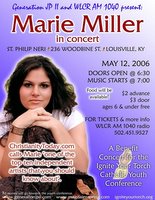
Some thoughts on the Generation JPII fundraiser, mentioned here.

Generation JPII is a youth group in the Archdiocese of Louisville. Their mission statement:
Generation JPII is an association of youth and young adults who embrace a foundation, a mission, and a call. The foundation is the teaching of Jesus Christ elucidated by the Magisterium of the Roman Catholic Church. The mission is protection of the sanctity of human life. The foundation empowers the youth and young adults in this mission, guides them throughout their lives, secures their eternal destinies, and helps them guide more souls to Heaven. The call is to Sainthood. It is God's voice speaking in the depths of the human heart, clearly echoed in Pope John Paul II's love for the youth.
Sweet.

The fundraiser was a concert by the up-and-coming Catholic musician, Marie Miller, at the St. Philip Neri oratory. I wanted to go because I knew there would be tons of youth there and I had heard great things about this group. They only served to affirm the hope and optimism I have for great things on the horizon in the Archdiocese of Louisville. The Holy Spirit is doing great things in our youth who are on fire for their faith and are in love with the Church. It was so inspirational to be there! And I was amazed to see so many youth showed up for the concert! It was a family affair too, with many families bringing their young children. I hoped that I would be able to promote vocations by my presence there as a seminarian and hopefully encourage some young men to discern the priesthood.

I volunteered to work the door, selling tickets to the show and food tickets for concessions. I was looking for a young man I saw at the 8:30am Mass that morning. I was serving the Mass and noticed that he genuflected before receiving communion and then received on the tongue rather than in-hand which is a particularly devotional thing to do for some people. Then I noticed he was praying the rosary after Mass at one of the back pews. After Mass I approached him, asked him how he was doing, and asked if he knew of the G-JPII fundraiser that evening. He said he did so I told him I'd see him there.

At the fundraiser I talked briefly with some young adults who were running the show and others who recognized me as a seminarian. Apparantly, people actually pay attention to the seminarian posters around the Archdiocese! They were all very kind and supportive and interested in how my discernment was progressing.

During the intermission of the concert I managed to weasel my way into the program in order to make a brief announcement to introduce myself to the crowd. I wanted the youth to know that I was there if any of them had any questions whatsoever about the priesthood, seminary, or discernment in general. Throughout the rest of the show and mostly afterwards several teens approached me with various questions about seminary. And I was even able to catch up with the young man I saw earlier that day. I asked him if he had thought about the priesthood. He said he had so I encouraged him to keep praying about it, that our Lord would reveal to him His Will for his life, and that discernment is a beautiful thing :)

One seventh grader sort of latched onto me. He recognized me from when I spoke to his class with Fr. Naylor, when I was helping him out at St. Aloysius during the Triduum. He thought it was cool that we shared the same first name and he was glad that I came to answer his class's questions. I asked if he was an alter server and he said he was so I tried to affirm this particular calling that he was already living. Great kid, great personality. He has a sister who is a member of a religious order in D.C. and another sister discerning the same order. Maybe he has a vocation as well? St. Tarcisius, pray for him.
As a result of my schpeel several people, young and old, approached me with support and assurances of their prayers. I was also touched to receive several requests for prayers as well. One woman asked me if I would pray for her family who had fallen away from the Church. I assured her I would.

At the end of the day I estimated that G-JPII made about $1000, all going towards their upcoming 2nd annual Ignite Your Torch Conference. Go get 'em guys, rekindle the gift of God within you.

Blessed Pier Giorgio Frassati, pray for us!

Thursday, May 18, 2006

quick update

Hey guys, I've had a great last few days. Just wanted to post a quick update.

Well, I'm back home in Owensboro, KY on a week long break until I have to return to St. Mary's for a "Summer Seminar"/extended spiritual retreat-type thing until mid-June.

This past Friday, my first day back in Louisville after a good while, I went to an AWESOME fundraiser for a local youth group: Generation JPII. I was very very impressed! And Marie Miller had an awesome show.


Sunday, the 14th, was my 26th birthday and it was great to spend it with my family. I bought Plumb's new CD for myself :) Awesome Christian Rock. And for the record, she influenced Evanesence, not vice versa ;) My younger brothers Andy and Ben got me an iTunes Music card, my parents got me the compact version of The Best Bible, the Revised Standard Version: Catholic Edition :) (The 2nd edition was recently released, it's like the NRSV without the inclusive language) They also got me a little "Cracking The Da Vinci Code" booklet (online here) and a cool t-shirt. My twin brother Nick got me a book of Latin Hymns.

The last couple days were a little lazy... sleeping in, watching T.V., etc. So today I got up a little early, mowed the lawn, ran some errands, and BBQ'd about 30 pieces of chicken on the 'ol grill... great day. Ahhhh how Owensboro Does BBQ!

I'll post more later about my reactions to all of the above, especially the fundraiser.

Tuesday, May 09, 2006

priesthood isn't a career

Priesthood Isn't a Career, Says Pontiff
Ordains 15 on World Day of Vocations

VATICAN CITY, MAY 7, 2006 (Zenit.org).- The priesthood is not a path to prestige, says Benedict XVI.

In his homily today during the ordination Mass of 15 new priests in St. Peter's Basilica, the Pope said that the spirit of the priesthood is opposed to "making a career" of it, to get to the "top," or "to seek a position through the Church: to be served rather than to serve."

The HolyFather criticized the "image of the man who, through the priesthood, wants to be important, to become a personality."

"But the only legitimate ascent to the ministry of the pastor is the cross," said the Pope. "This is the door."

On World Day of Prayer for Vocations, Benedict XVI said that to be a priest is "not to desire to become personally someone, but to live for the other, for Christ and, in this way, through him and with him, to live for the men he seeks, whom he wishes to lead on the path of life."

The Pope continued: One "enters the priesthood through the sacrament, that is, through giving oneself to Christ, so that he can dispose of me, so that I serve him and follow his call, even if it is opposed to my desires for self-fulfillment and esteem.

"To enter through the door, which is Christ, means to know him and love him ever more, so that our will is united to his and our conduct is his."

The Holy Father gave this advice to the new priests: "May Christ grow in us, may our union with him be ever more profound."

Of the 15 new priests ordained, five studied at the Roman Seminary, seven at the Redemptoris Mater diocesan college ofRome, one at Capranica College, also of the Diocese of Rome, and two are religious of the Discalced Carmelites.

Twelve are Italians, while the other three were born in Israel, Honduras and Poland.

Christ still calls

World Day of Prayer for Vocations was a couple days ago, but I'd still like to share this:

Pope on Vocations Day: Christ Still Calls
Cites a Friendship That Gives Meaning to Life

VATICAN CITY, MAY 7, 2006 (Zenit.org).- Despite the crisis of vocations in some countries, Christ continues to call adolescents, youths and adults to the priesthood, says Benedict XVI.

The Pope made these comments today, World Day of Prayer for Vocations, after ordaining 15 priests in St. Peter's Basilica, and before praying the midday Regina Caeli with crowds gathered in St. Peter's Square.

The Holy Father referred to "the experience of Jesus' first disciples that, after meeting him on the lake and in the villages of Galilee, were captivated by his attractiveness and love" to explain why men and women decide to consecrate their whole life to Christ.

"The Christian vocation always implies renewing this personal friendship with Jesus Christ, which gives meaning to one's life and makes it available for the Kingdom of God," the Pontiff said.

Benedict XVI continued: "The Church lives from this friendship, nourished by the word and the sacraments, holy realities entrusted in a particular way to the ministry of bishops, presbyters and deacons, consecrated by the sacrament of holy orders.

"The mission of the priest is irreplaceable and, although in some regions there is a lack of clergy, there is no doubt that God continues to call adolescents, youths and adults to leave all to dedicate themselves to the preaching of the Gospel and the pastoral ministry."

Following Christ

"Another special way of following" Christ, the Pope said, "is the vocation to the consecrated life, which is expressed in a poor, chaste and obedient life, totally dedicated to God, in contemplation and prayer, placed at the service of brothers, especially the little ones and the poor."

Also, the Holy Father said, "let us not forget that Christian marriage is a vocation to holiness in the full sense of the word, and that the example of holy parents is the first condition favorable for the flowering of priestly and religious vocations."

Benedict XVI concluded by appealing for the prayers of all believers "so that the seeds of the vocation that God sows in the hearts of the faithful will mature and bear fruits of holiness in the Church and the world."

According to data in the latest Statistical Yearbook of the Church, the number of priests fell by 3.5%, from 420,971 to 405,891, in the period 1978-2004.

In the same period, women religious decreased by 22.5%, from 990,768 to 767,459.

the metaphysics of christian belief

Well, lemme tell ya, these papers were really stressfull! But only because I procrastinated so much! I'm done with all of them though and am now concentrating on my two remaining finals. Here's the first of a few I still need to post, my fifth one this semester: Sokolowski on Aquinas and the Metaphysics of Christian Belief. I really like Soko (as we call him), I used him on several papers this year.


In his book, The God of Faith & Reason: Foundations of Christian Theology,[1] Monsignor Robert Sokolowski pioneered what he calls the Theology of Disclosure. Briefly, in his own words, this is “the reflective study of how the Christian distinction between God and the world is presented to us.” This distinction is dependent on the distinctively Christian understanding of God that lies at the intersection of faith and reason; and this is the heart of the matter. Throughout the book, Sokolowski thoroughly and clearly treats the problem of faith and reason, a problem that concerns their compatibility and the tendency to either reduce faith to “rational thinking and to natural human experience” or to regard faith as “unreasonable and arbitrary.”[2]

“In chapter five [of Sokolowski’s book], the metaphysics of St. Thomas is interpreted as a development of the Christian distinction between God and the world.”[3] This allows us to move from a discussion of the Christian understanding of God – and the ways in which it is unique and different in light of the pagan understanding – toward discussions of: the differences and disclosures of natural and theological virtue and action; Sokolowski’s Theology of Disclosure; a reexamination of God’s existence; the Scriptures’ understanding of God; our experience of Him; and the Sacraments that bring all of this together. Thus, chapter five amounts to a critical step in the solution of the problem of faith and reason, of the Christian understanding of God, and the Christian distinction between God and the world.

Sokolowski grounds the chapter in Aquinas. He notes that Aquinas speaks of God as ipsum esse subsistens and describes all other beings as existing through a participation in esse. In other words, God is described as Subsistent Act of Existing Itself (or “existence in its fullness”) and creatures as having merely the act of existing. But, what does Aquinas mean by this?

First, in chapter one of his treatise, On Being and Essence,[4] Aquinas explains that “being can be attributed to anything concerning which an affirmative proposition can be formed.” In this way, we could call “blindness” a being because it is in the eye but it does not have an essence.[5] Aquinas describes essence as “that through which something is constituted in its proper genus or species” or “what a thing is.” It is what Aristotle calls quod quid erat esse, “the what a thing was to be,” that is, “that through which something is a certain kind of being.” Ultimately, essence is potential and must receive an actualizing principle, esse, to really exist in the world.[6]

Now, applying this to God, when we say that He is Subsistent Act of Existing Itself we mean that He is the one being whose essence is to exist; what He is equals that He is.[7] On the contrary, in chapter four of Aquinas’ treatise we see that a creature’s act of existence, its esse, is other than its essence: “every [such] essence or quiddity can be understood without its act of existing being understood. I can understand what a man or phoenix is, and yet not know whether or not it exists in the nature of things.” Aquinas then explains the reasonableness of the creature’s participation in esse:

It is impossible that the act of existing itself be caused by the form or quiddity... for then something would be the cause of itself and produce itself in existence, which is impossible. It is therefore necessary that everything whose act of existing is other than its nature have its act of existing from another.[8]

Why is this important? Because we must properly define the Christian understanding of God before we can move on to Sokolowski’s further treatment of this understanding and the Christian distinction.

Sokolowski adds that God is “the sheer act of esse subsistens, the sheer act of existing.” Also, “He is not confined to being this kind of thing as opposed to that kind. He is not a ‘kind’ of thing at all, only sheer esse.” Now, he is gradually setting up the distinction between God and man that he will develop throughout the rest of the chapter: “Between God and creatures there is no exclusion like the exclusion among finite beings.” Furthermore, at the beginning of the third paragraph he states that “Creatures then are limited in two ways.” Our train of thought was grounded on Aquinas and is now firmly set on a path of distinctions, a path on which we can now form responses to “the presentation of differences in which two things emerge as other to each other.”

We are always distinguishing, making distinctions, in our experience, but we cannot experience the distinction between God and the world. This is unlike the pagan understanding of the divine, because the world, the whole, was for them the “final context” and the divine was just as much a part of the world as the creatures. This repeats the uniqueness of God because his existence is understood as being possible without the world and independent of it.

Sokolowski then explains, interestingly enough, that Aquinas’ description of esse can only work in the Christian distinction between God and the world, i.e. in the “un-necessary-ness” of the world. Existence, esse, doesn’t dawn on the pagan mind because with it he would have to address non-existence which he could not fathom after having setup the world as the fullness of “place” or “stage,” or again, as Sokolowski earlier referred to it, the “final context.” Only with Christianity do we have a notion of existence (and therefore non-existence).

Next, Sokolowski presents a distinction between what we will call the “Christian Dilemma” and the Euthyphro Problem. In the Christian Dilemma,

[E]ither created natures are inherently arbitrary, and things seem to lose their natural necessity; or created natures are somehow integral and determined apart from God’s will, at least in their potentiality to be what they are, and God’s creative power seems to be confined by something outside himself.[9]

This is similar to the Euthyphro Problem, only with respect to essence (he also applies this dilemma to goodness and being capable of speech) rather than the pious and the loved. In the Platonic dialogue, Euthyphro, Socrates asks, “Is the pious being loved by the gods because it is pious, or is it pious because it is being loved by the gods?”
[10] But, as problematic as these both may seem, they are only so because of our temptation to address them in the same limited context the pagans used. We must allow ourselves to think within a Christian “world-view”.[11]

Aquinas shows us how to avoid these dilemmas. In his “doctrine of the divine ideas” he explains that the ideas or forms in the mind of God are the “exemplars according to which things are created.” His use of the word “forms” here reminds us of Plato but in Plato’s doctrine things are not created according to the forms, they mirror them. And Aquinas himself explains that what he is describing is not what Plato had in mind. In chapter five of his treatise On Being and Essence, Aquinas says,

If we say God is only an act of existing, we do not necessarily fall into the error of those who have stated that God is that universal existence by which each thing formally exists. The act of existing which God is, is such that no addition can be made to it. Hence, by its very purity, His act of existing is distinct from every other act of existing.[12]

And this is precisely the point Sokolowski has been making all along. “ ‘What things are’ retains its necessity because the essences of things are the ways esse can be determined, but esse subsists only in God, so the basis for the determination of things is not distinct from him: it is his own existence.”

Sokolowski then reiterates the Christian distinction between God and the world, reminding us that philosophy can help theology make this distinction more explicit. We must be careful to have a proper understanding of the world and God; only through the cooperation of philosophy and theology can this be accomplished. Sokolowski then summarizes by saying that misunderstandings can be prevented by:
· Respect for the whole and its necessities;
· Awareness of God as ipsum esse subsistens and the language that this requires; and
· Studying the unique character of the God - whole distinction.

And once again, Sokolowski repeats the uniqueness of the Christian distinction: “diversities do not occur to the Christian sense of God precisely because it is defined, not by contrast to other beings in the world, but in contrast to the world as the whole.” Because God is pure esse and not pure “whatever a culture would wish him to have or be” (e.g. thinking, life, power, etc.) he is more universal and can be all for all.[13] The pagan understanding of the divine was so ingrained in a particular people or culture that if the god was separated from the people than the god was demolished. And if one culture assumed another than the assumed god was destroyed as well. On the contrary,

If the Christian distinction is correctly appreciated and correctly lived, then the cultural forms in which it is realized, the habits, music, language, gestures, work, and social order, the nuances of moral life and of human relationships, can be brought forward in their own excellence and still be in the service of Christian faith.”[14]

Toward the end of chapter five, Sokolowski presents one more important distinction but only briefly develops it. This is the distinction between Christian theology and Averroistic interpretations of Aristotle and brings us back to our Thomistic treatment of being and essence at the beginning of the chapter:

Averroës wrote with the intention of rescuing Aristotle from Neo-Platonic and religious impurities, especially as found in the works of Avicenna. In particular, whereas for Avicenna existence is an accident of essence, or in other words, the universal or form precedes the individual thing, for Averroës individual substances are the primary existents, and the distinction between them and their essence is the work of the mind.[15]

The other non-Christian doctrines he held where the eternity of the world, the absence of individual providence, and the doctrine of “merely collective immortality.” Because of these errors, Sokolowski adds, Aristotle was considered a threat to Christianity. Plato, though, was more widely accepted because his doctrines seemed more orthodox. But Sokolowski warns us against condemning Aristotle (and praising Plato) too quickly. We must be careful to make the proper distinctions here as well. Sokolowski echoes the clarification from Aquinas that we saw before: “oneness or goodness is what thinking catches glimpses of when it reaches the edge of rational order and tries to think about what lets the order be: but this letting be is not creation.” And finally, “the Christian sense of God is to be distinguished not only from natural necessities but from the oneness and goodness that permit such necessities to be what they are and to appear as they do.” Now that philosophy and metaphysics have gotten us this far, it is up to theology to take over and make this distinction.


[1] Catholic University of American Press, Copyright ©1995. All Sokolowski quotes are from chapter five: “The Metaphysics of Christian Belief.” Hereafter referred to as “Sokolowski”
[2] Sokolowski, p. xiii
[3] Sokolowski, p. xiv
[4] Selected Writings of St. Thomas Aquinas, translated by Robert P. Goodwin, Library of Liberal Arts, Prentice Hall, Copyright ©1965. Hereafter referred to as “Aquinas”
[5] Aquinas, p. 34: “some things are said to be beings which do not have an essence, as is evident in privations.”
[6] Cf. Notes from Dr. Seaton, Metaphysics, 3-10-06
[7] Ibid.
[8] Aquinas, p. 55
[9] Sokolowski, p. 43
[10] Cf. Euthyphro 10a-11b from Five Dialogues, Second Edition, translated by G.M.A. Grube, Copyright ©2002 Hackett Publishing Company, Inc.
[11] Seaton’s fourth pedagogical principle
[12] Aquinas, p. 58
[13] Cf. 1 Cor. 9:22 “To the weak I became weak, that I might win the weak. I have become all things to all men, that I might by all means save some.”
1 Cor. 15:22 “For as in Adam all die, so also in Christ shall all be made alive.”
1 John 2:2 “and he is the expiation for our sins, and not for ours only but also for the sins of the whole world.”
[14] Sokolowski, p. 48
[15] Oxford Dictionary of Philosophy, “Averroism,” Copyright ©1996

Monday, May 08, 2006

Disclaimer

You may notice I've explanded the book list on the right side of the page, under the links and buttons. These are all the books I used this semester and last semester ('05-'06). If you buy one after clicking on its link then I get a small commission.

My reason for this post though is to offer a small disclaimer. While I would personally recommend many of these books, some of them I would not. Some of the books, I thought, were very strong and well-suited the class(es) they were for, others I thought were pretty weak. And some of the philosophy books I definitely would not read without some sort of Catholic source to respond to it, especially if you're new to philosophy.

My main reason for including this book list is so that guys who are discerning may have a better idea of what seminary is like... or for anyone who would be interested for that matter.

If you would like my thoughts on any particular book just leave a comment or email me.

God Bless,
Matt

Erie Ordinations... the Diocese that is!


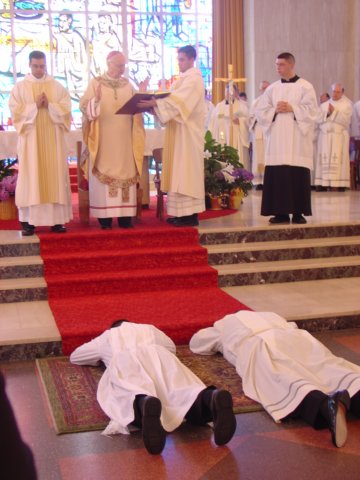
Here's a slideshow from the Diaconate Ordinations for the Diocese of Erie, PA. My seminarian brother, and newly ordained Deacon, Justin Pino is laying prostrate on the right and my friend Dan is the server. The Deacon on the left, vested, is also a fellow seminarian, Marc Solomon. And the bishop is Bishop Troutman, head of the USCCB's committee on the liturgy.

St. Lawrence, pray for us!
St. Stephen, pray for us!
St. Ephrem, pray for us!

Monday, May 01, 2006

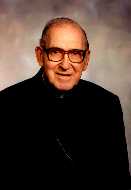
Bishop Maloney, requiescat in pace


From The Record, emphasis mine:
(Louisville, KY) Bishop Charles G. Maloney, auxiliary bishop of the Archdiocese of Louisville since 1955 and priest of the Archdiocese of Louisville since 1937, died this morning at Saints Mary and Elizabeth Hospital. He was 93 years old.

Archbishop Kelly praised his brother bishop for his love and service to the Archdiocese of Louisville: “We have lost a great and gentle servant of the Catholic Church and this community. Bishop Maloney will be greatly missed by all of us.”

The funeral liturgy for Bishop Maloney will be held on Thursday, May 4, 11:00 a.m. at the Cathedral of the Assumption, 433 South Fifth Street. Visitation will be at Highland Funeral Home, 3331 Taylorsville Road, on Tuesday, May 2, from 3 to 5 p.m. and 7 to 9 p.m. Bishop Maloney’s body will be received at the Cathedral of the Assumption on Wednesday, May 3, at 3:00 p.m. Visiting hours will follow at the Cathedral until 8:00 p.m. on Wednesday and beginning at 9:00 a.m. until the funeral on Thursday. Burial is at Calvary Cemetery.

The Most Reverend Charles Garrett Maloney, D.D., has served the Archdiocese of Louisville for nearly 70 years. Born on September 9, 1912, Bishop Maloney served as auxiliary bishop to three archbishops: John A. Floersh, 1955-1967; Thomas J. McDonough, 1967-1981; and Thomas C. Kelly since 1982. His appointment as auxiliary bishop was a first in the history of the Archdiocese of Louisville. In 1995, he was named the first titular bishop of Bardstown, Kentucky. Archbishop Thomas C. Kelly, O.P., announced this appointment, made by Pope John Paul II, on the occasion of Bishop Maloney’s 40th anniversary as a bishop.

Bishop Maloney retired as auxiliary bishop in 1988. After retirement he remained active in ministry. He was a member of the archdiocesan Priests’ Council and the College of Consultors, major advisory bodies to the Archbishop. Maloney also shared parish confirmation duties with Archbishop Kelly until the last couple of years. As a priest and bishop, Maloney has confirmed more than 80,000 Catholics.

A native of Louisville, Bishop Maloney attended St. James Elementary and is a summa cum laude high school and junior college graduate of St. Joseph College, Renssaelaer, Indiana. He completed pre-ecclesiastical studies at the North American College, Rome, and was ordained a priest in the College Chapel on December 8, 1937. Bishop Maloney studied canon law and received his licentiate degree in 1942. Bishop Maloney studied canon law at the Catholic University of America from 1940 to 1942.

Prior to being named auxiliary bishop, Maloney served in a variety of positions within the Archdiocese. He was chaplain at St. Thomas Orphanage from 1938 to 1939, associate pastor of St. Frances of Rome Parish from 1939 to 1940 and chaplain at St. Joseph Infirmary from 1942 to 1946. He became secretary to Archbishop Floersh in 1946 and assistant chancellor of the Archdiocese in 1951. In 1952 he was named chancellor and in 1954 vicar general. Bishop Maloney was appointed auxiliary bishop by Pope Pius XII in December 1954 and consecrated a bishop on February 2, 1955. In September of 1955 he was named titular bishop of Capsa, Africa, a title he held until his most recent appointment as titular bishop of Bardstown.

In the 1960s, Bishop Maloney attended sessions of the Second Vatican Council. At a session in 1965, he gave a talk on religious liberty, defending the right of people to free expression of religion without coercion or pressure from the government. In 1974, Bishop Maloney was among 69 United States bishops who attended a month-long U.S. Bishops’ Theological Consultation in Rome.

One of the Bishop’s most enduring contributions to the Archdiocese has been his financial and administrative skill. According to Archbishop Kelly, Maloney is a “genius at financial administration … But of all the things that I treasure about him, it is his wisdom, which is a combination of charity and experience. He is a man of profound faith. That gives him a vision of Church that very few people have.”

Bishop Maloney has received many honors during his years of service, including the St. George Emblem from the Boy Scouts of America, a Doctor of Humane Letters from Bellarmine University and the 1999 Salute to Catholic School Alumni Award.

The son of David and Imelda Shea Maloney, Bishop Maloney is the second-oldest of 12 children, three of whom became priests and one a sister. According to the Official Catholic Directory, Bishop Maloney had been ordained a bishop longer than any other living bishop in the United States.

The oldest Roman Catholic archdiocese west of the Appalachians, the Archdiocese of Louisville was founded as the Diocese of Bardstown in 1808, transferred to Louisville in 1841 and elevated to an Archdiocese in 1937. The Archdiocese covers 24 counties in Central Kentucky and hosts a Catholic population of 200,000.
Also of Note, an excerpt from an earlier article, emphasis mine:
Bishop Maloney — then auxiliary bishop of Louisville and now auxiliary bishop emeritus — is one of only eight U.S. bishops still living who took part and voted at the council. He attended all four sessions of the council from its opening on Oct. 11, 1962, until its closing on Dec. 8, 1965.

He also played an active role in council deliberations, giving oral presentations — called interventions — on two key subjects: religious liberty and Scripture. One historian, Father Gerald Fogarty, called Bishop Maloney one of the major American voices at the council in supporting religious liberty.

The Declaration on Religious Freedom was one of 16 documents approved by Vatican II. And Bishop Maloney, in a 1987 interview with The Record, recalled the debate on religious liberty and his talk on it.

He said it had become clear that, due to opposition, the religious freedom document would have failed unless it was pushed by the U.S. bishops at the council.

Bishop Maloney said he had suggested that one American bishop make a presentation on the issue. This bishop replied to him, "Well, you know Latin; you do it."

And so he did at a session in the autumn of 1965.

Those opposed to the religious liberty document contented that "error has no rights," Bishop Maloney recalled in the 1987 interview. "As I sat in the (council) hall, waiting to be called (to speak), the thought came to me that if this (objection) is valid, then some of the bishops here didn’t have any right to speak because they have contradicted each other. ... If error has no rights, how could they speak?"

The central question, as Bishop Maloney said he viewed it, was that "people have rights." This is what he emphasized in his talk, and this is what he considered the essence of the document.

The English translation of Bishop Maloney’s talk said in part:

"A person who expounds religious error does not derive his right from those errors. Rather by reason of his dignity as a human person endowed with free will he has the facility of speaking and acting.

"These two ideas are poles apart: The right to act (or decline action) on the one hand, and on the other the right to be free from coercion in acting or attempting to act. It is the latter right which we desire to affirm in religious matters."

The religious liberty declaration, which the council approved in 1965, says that religious freedom is a right found in the dignity of each person and that no one should be forced to act in a way contrary to his or her beliefs. The document does not say "error has rights," Bishop Maloney noted.

The document was "carefully worded" to allow everyone at the council to agree with it, Bishop Maloney recalled. "That was the genius of the council," which enabled it to get a large consensus on decrees.

On the other question he addressed — Scripture — Bishop Maloney was among council members favoring the use of modern research in interpreting the Scriptures.

"The church now can make use of new discoveries to corroborate the things it has been teaching and to obtain more explicit knowledge of other elements," he said at the council. "The historical method can make genuine contribution to the right knowledge of Scripture if this method is correctly understood and applied."

Bishop Maloney, in another interview with The Record, explained what Vatican II did and what it did not do regarding church renewal.

"It’s really important to repeat that the council did not change the doctrines of the church," he said. "The role of the council was to find new insights which would give modern man a better understanding of the church and provide greater attraction for it."

Bishop Maloney, 93, celebrated his 50th anniversary as a bishop earlier this year. He lives at the Little Sisters of the Poor St. Joseph Home for the Aged in Louisville.

The other still-living U.S. bishops who attended Vatican II are: retired Archbishop Philip M. Hannan of New Orleans; retired Bishop Marion F. Forst of Dodge City, Kan,; retired Bishop Charles A. Buswell of Pueblo, Colo.; retired Archbishop Raymond G. Hunthausen of Seattle; retired Auxiliary Bishop John J. Ward of Los Angeles; retired Bishop Loras J. Watters of Winona, Minn.; and retired Maronite Archbishop Francis M. Zayek of St. Maron of Brooklyn, N.Y.
Another article from the Louisville Courier-Journal

I was talking about our beloved Bishop Maloney at lunch today with Fr. Stevens, our Vice-Rector and a Sulpician Father from the Archdiocese of Louisville. He recalled one funny moment when someone asked him, "Bishop, who ordained you?" To which he quickly replied, "The Holy Spirit!" hehe :)

Bishop Maloney was a mentor and friend to many priests of the Archdiocese, including my old spiritual director, Fr. Paul Beach.

My prayer:
O Blessed Mother, Mary, if it pleases your Immaculate Heart, and the will of your Son, usher our beloved Bishop Maloney to God, where he may enjoy eternal happiness and through his intercession we may continue to increase in holiness through his loving care.

Month of Mary

Pontiff Hails Mary as Mother and Teacher
Calls May a Time to Rediscover Her Role
VATICAN CITY, APRIL 30, 2006 (Zenit.org).- Benedict XVI proposes May to be a time to rediscover the role of the Virgin Mary in Christian life.

After Christ's resurrection, when the apostles gathered with her, Mary was for them both "mother and teacher, a role she continues to carry out for Christians of all times," the Pope said today before praying the Regina Caeli with the faithful gathered in St. Peter's Square.

"Every year, during Eastertide, we live this experience more intensely and, perhaps, precisely for this reason, popular tradition has consecrated the month of May, which normally falls between Easter and Pentecost, to Mary," the Holy Father said.

The Bishop of Rome invited the faithful to rediscover in the coming month "the maternal role she carries out in our lives, so that we may always be docile disciples and courageous witnesses of the risen Lord."


Benedict XVI entrusted to Mary "the needs of the Church and of the world, especially at this moment marked by not a few shadows."

The Pope invited those present to invoke the intercession of St. Joseph, whom the Church will remember on Monday as worker, especial
ly for the labor world.

The Holy Father will begin the month of May by praying the rosary Monday afternoon at the Shrine of Divine Love, near Rome.

Also, during the month of May, after evening prayer the community gathers around "the Sedes" and chants the following, in Latin:
From the Easter Vigil to Pentecost

Regina Caeli, laetare, alleluia.
Quia quem meruisti portare, alleluia.
Resurrexit, sicut dixit, alleluia.
Ora pro nobis Deum, alleluia.

V. Gaude et laetare, Virgo Maria, alleluia.
R. Quia surrexit Dominus vere, alleluia.

Oremus.
Deus, qui per resurrectionem Filii tui, Domini nostri Iesu
Christi, mandum laetificare dignatus es:
praesta, quaesumus: ut, per eius Genitricem Virginem
Mariam, perpetuae capiamus gaudia vitae. Per eundem
Christum Dominum nostrum.
Amen.
Translation:
Queen of Heaven, rejoice, alleluia.
Has risen as he said, alleluia.
Pray for us to God, alleluia.
The son whom you merited to bear, alleluia.

V. Rejoice and be glad, O Virgin Mary, alleluia.
R. For the Lord has truly risen, alleluia.

Let us pray.
O God, who through the resurrection of Thy Son, our Lord Jesus Christ, did vouchsafe to give joy to the world; grant, we beseech Thee, that through His mother, the Virgin Mary, we may obtain the joys of everlasting life. Through the same Christ our Lord.
Amen.

My reaction to the above when we were done chanting? "Sweeeet."

Truthfulness

Truthfulness
You were praying before a crucifix, and you made this resolution: it is better to suffer for the truth, than for truth to suffer because of me.
– St. Josemaria Escriva, Furrow, #567

Thursday, April 27, 2006

plans

I've been posting my favorite excerpts of St. Louis de Montfort as a way to lead up to his Optional Memorial tomorrow. But I may not be able to post tomorrow because I'm leaving tonight to go to Erie, PA for the weekend for a brother-seminarian's Diaconate Ordination. Pray for me that I have safe travels with the guys I'm riding with and most especially pray for Justin Pino, of the Diocese of Erie, PA who will be a new Deacon soon!

St. Stephen Martyr, pray for us!

prayer card

I buddy of mine here at St. Mary's gave me a prayer card he had blessed by the Holy Father while he was in Rome for the Easter Break. Here's what it says:

If we let Christ into our lives, we lose nothing, nothing, absolutely nothing of what makes life free, beautiful and great. No! Only in this friendship are the doors of life opened wide. Only in this friendship is the great potential of human existence truly revealed. Only in this friendship do we experience beauty and liberation. And so, today, with great strength and great conviction, on the basis of long personal experience of life, I say to you, dear young people: Do not be afraid of Christ! He takes nothing away, and he gives you everything. When we give ourselves to him, we receive a hundredfold in return. Yes, open, open wide the doors to Christ and you will find true life. Amen.

de Montfort quotes 4

"When Mary holds you up, you do not fall; when she protects you, you need not fear; when she leads you, you do not tire; when she is favorable to you, you arrive at the harbor of safety."
-- St. Louis de Montfort quoting St. Bernard in True Devotion to Mary, p. 111

Some strong words from our holy saint:
"If any critic who reads this shall take it into his head that I speak here exaggeratedly, and with an extravagance of devotion, alas! He does not understand me - either because he is a carnal man who has no relish for spiritual things; or because he is a worldling who cannot receive the Holy Ghost; or because he is proud and critical, condemning and despising whatever he does not understand himself. But the souls which are not born of blood, nor of flesh, nor of the will of man (Jn. 1:13), but of God and Mary, understand me and relish me - and it is for these that I also write."
-- True Devotion to Mary, p. 115

Of Mary's "charitable duty... toward her faithful servants":
"She gives them to eat of the most exquisite meats of the table of God; for she gives them to eat of the bread of life, which she herself has formed" (Sirach [Ecclesiasticus] 24:26)
-- T.D.M., p. 130-131

Of the "wonderful effects of this devotion" is "deliverance from scruples, cares, and fears":
"This Mother of fair love (Sirach[Eccles.] 24:24) will take away from your heart all scruple and all disorder of servile fear... If, unfortunately, you offend Him, you will at once humble yourself before Him. You will ask His pardon with great lowliness, but at the same time you will stretch your hand out to Him with simplicity, and you will raise yourself up lovingly, without trouble and disquietude, and go on your way to Him without discouragement."
-- T.D.M., p. 139

de Montfort (T.D.M., p. 140) quotes St. Bonaventure with the now-famous "I am altogether yours" that I believe is the source of our late Holy Father Pope John Paul the Great's motto: "Totus Tuus." Please, someone correct me if I'm wrong or if you know more accurately the reference. JPII did say this though:

"Totus Tuus. This phrase is not only an expression of piety, or simply an expression of devotion. It is more. During the Second World War, while I was employed as a factory worker, I came to be attracted to Marian devotion. At first, it had seemed to me that I should distance myself a bit from the Marian devotion of my childhood, in order to focus more on Christ. Thanks to Saint Louis of Montfort, I came to understand that true devotion to the Mother of God is actually Christocentric, indeed, it is very profoundly rooted in the Mystery of the Blessed Trinity, and the mysteries of the Incarnation and Redemption".
-- John Paul II in Crossing the Threshold of Hope, Arnoldo Mondadori Editori, 1994

"When we praise her, love her, honor her or give anything to her, it is God who is praised, God who is loved, God who is glorified, and it is to God that we give, through Mary and in Mary."
-- T.D.M., p. 145

Hooo-rah!!

Wednesday, April 26, 2006

funny!

Haha! I stumbled on the greatest post today! It's from an Irish guy in the U.K. and for some reason I thought it was totally hilarious! I found it because I did a Google search for the phrase "Surrexit Dominus Vere," which, I'm ashamed to say I didn't know how to translate (and you should be too). Well... I could have translated it... but yunno how it is, when you just wanna find something really quick Google is a click away. Sorry Dr. Seaton, I know you taught me better! Anyway, read his post for a good dose of Irish humor!

Tuesday, April 25, 2006

de Montfort quotes 3

"She also gives her whole self, and gives it in an unspeakable manner, to him who gives all to her."
-- True Devotion to Mary, p. 91

"If we give to her, we give necessarily to Jesus"
-- True Devotion to Mary, p. 93-94

"If this devotion to our Blessed Lady makes the road to Jesus easier, how is it then that they who follow it are the most despised of men?"
-- T.D.M., p. 97

"We make more progress in a brief period of submission to and dependence on Mary than in whole years of following our own will and of relying upon ourselves"
-- T.D.M., p. 98

"he who wishes to have in himself the operation of the Holy Ghost must have His faithful and inseparable spouse, the divine Mary"
-- T.D.M., p. 105

In speaking of the life of Mother Agnes of Jesus, "a Domincan nun of the convent of Langeac, in Auvergne, who died there in the odor of sanctity in the year 1634," St. Louis de Montfort notes that she taught this devotion to "many persons who made great progress in it - among others, Father Olier, the founder of St. Sulpice, as well as many priests and ecclesiastics of the same seminary." Fr. Olier also founded the Society of St. Sulpice, or the Sulpicians, who run my seminary, St. Mary's in Baltimore, and have since 1791.

And another:
Let me remind you again of the dependence shown by the three divine Persons on our Blessed Lady. Theirs is the example which fully justifies our dependence on her. The Father gave and still gives his Son only through her. He raises children for himself only through her. He dispenses his graces to us only through her. God the Son was prepared for mankind in general by her alone. Mary, in union with the Holy Spirit, still conceives him and brings him forth daily. It is through her alone that the Son distributes his merits and virtues. The Holy Spirit formed Jesus only through her, and he forms the members of the Mystical Body and dispenses his gifts and his favours through her.

With such a compelling example of the three divine Persons before us, we would be extremely perverse to ignore her and not consecrate ourselves to her. Indeed we would be blind if we did not see the need for Mary in approaching God and making our total offering to him
-- T.D.M., p. 89

prayer request

Please pray for a friend of mine back home who is struggling greatly from mental disorders. His name is Tom.

St. Dymphna, pray for us

How our Holy Father discerned his vocation

"Pope's Q&A With Young People (Part 2)
"It Was Not Enough to Love Theology in Order to Be a Good Priest"

VATICAN CITY, APRIL 24, 2006 (Zenit.org).- Here is the second part of the translation of the question-and-answer session Benedict XVI had with young people of the Latium region of Italy
on April 6.

The event, in St. Peter's Square, was in preparation for the diocesan-level World Youth Day. Part 1 appeared Sunday.

* * *
4. Your Holiness, My name is Vittorio, I am from the Parish of St. John Bosco in Cinecittà. I am 20 years old and am studying educational sciences at the University of Tor Vergata.

Once again, in your message you invite us not to be afraid to respond to the Lord with generosity, especially when he suggests following him in the consecrated or priestly life. You tell us that if we are not afraid, if we trust in him, then we will not be deceived.

I am convinced that many of us, here or among those at home who are watching us this evening on television, are thinking of following Jesus in a life of special consecration, but it is not always easy to understand if this is the right path.

Can you tell us how you yourself came to understand your vocation? Can you give us some advice so that we can really understand whether the Lord is calling us to follow him in the consecrated or priestly life? Thank you.

Benedict XVI: As for me, I grew up in a world very different from the world today, but in the end situations are similar.

On the one hand, the situation of "Christianity" still existed, where it was normal to go to church and to accept the faith as the revelation of God, and to try to live in accordance with his revelation; on the other, there was the Nazi regime which loudly stated: "In the new Germany there will be no more priests, there will be no more consecrated life, we do not need these people; look for another career."

However, it was precisely in hearing these "loud" voices, in facing the brutality of that system with an inhuman face, that I realized that there was instead a great need for priests.

This contrast, the sight of that anti-human culture, confirmed my conviction that the Lord, the Gospel and the faith were pointing out the right path, and that we were bound to commit ourselves to ensuring that this path survives. In this situation, my vocation to the priesthood grew with me, almost naturally, without any dramatic events of conversion.

Two other things also helped me on this journey: Already as a boy, helped by my parents and by the parish priest, I had discovered the beauty of the liturgy, and I came to love it more and more because I felt that divine beauty appears in it and that heaven unfolds before us.

The second element was the discovery of the beauty of knowledge, of knowing God and sacred Scripture, thanks to which it is possible to enter into that great adventure of dialogue with God which is theology. Thus, it was a joy to enter into this 1,000-year-old work of theology, this
celebration of the liturgy in which God is with us and celebrates with us.

Of course, problems were not lacking. I wondered if I would really be able to live celibacy all my life. Being a man of theoretical and not practical training, I also knew that it was not enough to love theology in order to be a good priest, but that it was also necessary to be always available to young people, the elderly, the sick and the poor: the need to be simple with the simple.

Theology is beautiful, but the simplicity of words and Christian life is indispensable. And so I asked myself: Will I be able to live all this and not be one-sided, merely a theologian, etc.?

However, the Lord helped me and the company of friends, of good priests and teachers especially helped me.

To return to the question, I think it is important to be attentive to the Lord's gestures on our journey. He speaks to us through events, through people, through encounters: It is necessary to be attentive to all of this.

Then, a second point, it is necessary to enter into real friendship with Jesus in a personal relationship with him and not to know who Jesus is only from others or from books, but to live an ever deeper personal relationship with Jesus, where we can begin to understand what he is asking of us.

And then, the awareness of what I am, of my possibilities: On the one hand, courage, and on the other, humility, trust and openness, with the help also of friends, of Church authority and also of priests, of families: What does the Lord want of me?

Of course, this is always a great adventure, but life can be successful only if we have the courage to be adventurous, trusting that the Lord will never leave me alone, that the Lord will go with me and help me.

Sunday, April 23, 2006

de Montfort quotes 2

"For she is not like other creatures who, if we should attach ourselves to them, might rather draw us away from God than draw us near him."
-- True Devotion to Mary, p. 46

"It is more perfect, because it is more humble, not to approach God of ourselves without taking a mediator."
-- True Devotion to Mary, p. 51

"A true client of Mary does not serve that august Queen from a spirit of lucre and interest, nor for his own good, whether temporal or eternal, corporal or spiritual, but exclusively because she deserves to be served, and God alone in her. He does not love Mary just because she obtains favors for him, or because he hopes she will, but solely because she is so worthy of love."
-- T.D.M., p. 67

"Now, Mary being the most comformed of all creatures to Jesus Christ, it follows that, of all devotions, that which most consecrates and conforms the soul to Our Lord is devotion to His holy Mother, and that the more a soul is consecrated to Mary, the more it is consecrated to Jesus."
-- T.D.M., p. 77

"We consecrate ourselves at one and the same time to the most holy Virgin and to Jesus Christ; to the most holy Virgin as to the perfect means which Jesus Christ has chosen whereby to unite Himself to us, and us to Him; and to Our Lord as to our Last End, to whom, as our Redeemer and our God, we owe all we are."
-- T.D.M., p. 80

de Montfort quotes 1

"The world was unworthy, says St. Augustine, to receive the Son of God directly from the Father's hands. He gave Him to Mary in order that the world might receive Him through her."
-- True Devotion to Mary, p. 12

"... the Holy Ghost, the more He finds Mary, His dear and inseparable spouse, in any soul, the more active and mighty He becomes in producing Jesus Christ in that soul, and that soul in Jesus Christ."
-- True Devotion to Mary, p. 14

"He who has not Mary for his Mother has not God for his Father"
-- T.D.M., p. 18

"Jesus Christ our Saviour, true God and true Man, ought to be the last end of all our other devotions, else they are false and delusive."
-- T.D.M., p. 37

"If, then, we establish solid devotion to our Blessed Lady, it is only to establish more perfectly devotion to Jesus Christ, and to provide an easy and secure means for finding Jesus Christ."
-- T.D.M., p. 38

And the humdinger:
In view of this, my dear Master, is it not astonishing and pitiful to see the ignorance and short-sightedness of men with regard to your holy Mother? I am not speaking so much of idolaters and pagans who do not know you and consequently have no knowledge of her. I am not even speaking of heretics and schismatics who have left you and your holy Church and therefore are not interested in your holy Mother. I am speaking of Catholics, and even of educated Catholics, who profess to teach the faith to others but do not know you or your Mother except speculatively, in a dry, cold and sterile way.

These people seldom speak of your Mother or devotion to her. They say they are afraid that devotion to her will be abused and that you will be offended by excessive honour paid to her. They protest loudly when they see or hear a devout servant of Mary speak frequently with feeling, conviction and vigour of devotion to her. When he speaks of devotion to her as a sure means of finding and loving you without fear or illusion, or when he says this devotion is a short road free from danger, or an immaculate way free from imperfection, or a wondrous secret of finding you, they put before him a thousand specious reasons to show him how wrong he is to speak so much of Mary. There are, they say, great abuses in this devotion which we should try to stamp out and we should refer people to you rather than exhort them to have devotion to your Mother, whom they already love adequately.

If they are sometimes heard speaking of devotion to your Mother, it is not for the purpose of promoting it or convincing people of it but only to destroy the abuses made of it. Yet all the while these persons are devoid of piety or genuine devotion to you, for they have no devotion to Mary. They consider the Rosary and the Scapular as devotions suitable only for simple women or ignorant people. After all, they say, we do not need them to be saved. If they come across one who loves our Lady, who says the rosary or shows any devotion towards her, they soon move him to a change of mind and heart. They advise him to say the seven penitential psalms instead of the Rosary, and to show devotion to Jesus instead of to Mary.

Dear Jesus, do these people possess your spirit? Do they please you by acting in this way? Would it please you if we were to make no effort to give pleasure to your Mother because we are afraid of offending you? Does devotion to your holy Mother hinder devotion to you? Does Mary keep for herself any honour we pay her? Is she a rival of yours? Is she a stranger having no kinship with you? Does pleasing her imply displeasing you? Does the gift of oneself to her constitute a deprivation for you? Is love for her a lessening of our love for you?

Nevertheless, my dear Master, the majority of learned scholars could not be further from devotion to your Mother, or show more indifference to it even if all I have just said were true. Keep me from their way of thinking and acting and let me share your feelings of gratitude, esteem, respect and love for your holy Mother. I can then love and glorify you all the more, because I will be imitating and following you more closely.

As though I had said nothing so far to further her honour, grant me now the grace to praise her more worthily, in spite of all her enemies who are also yours. I can then say to them boldly with the saints, "Let no one presume to expect mercy from God, who offends his holy Mother."
-- T.D.M., p. 39-41

Easter and on

Easter was a little awkward this year... sometimes my prayer life gets nudged off its fragile balance when I leave seminary for a while... so it didn't feel the same... but no matter, that doesn't negate the awesome fact of our Lord's Passion, Death, & Resurrection - all to draw our broken hearts into his Most Sacred Heart.

I do remember waking up early Easter morning, glancing at my watch, and thinking, "ah, thank God, its Easter... *deep breath*

Now I'm looking foward to this Friday, the Optional Memorial of St. Louis de Montfort. As you all know, he is the great Marian Saint and instructor of the Total Consecration to Jesus through Mary. One of the first things I did when I got to seminary (along with my d.b.) was prepare for and accomplish this Consecration. When I knelt at the same pew as our late Holy Father, Pope John Paul the Great, in our beautiful chapel here at St. Mary's and received a blessing from one of our deacons, I handed my formation over to our most Blessed Mother. I told her I couldn't do this without her help and intercession.

To prepare for the preparation (!) for the Consecration, I read The Secret of the Rosary and then True Devotion to Mary, both by St. Louis de Montfort. Each day up to and including the Optional Memorial I'll post two or three quotes from True Devotion that particularly touched me as I was reading.

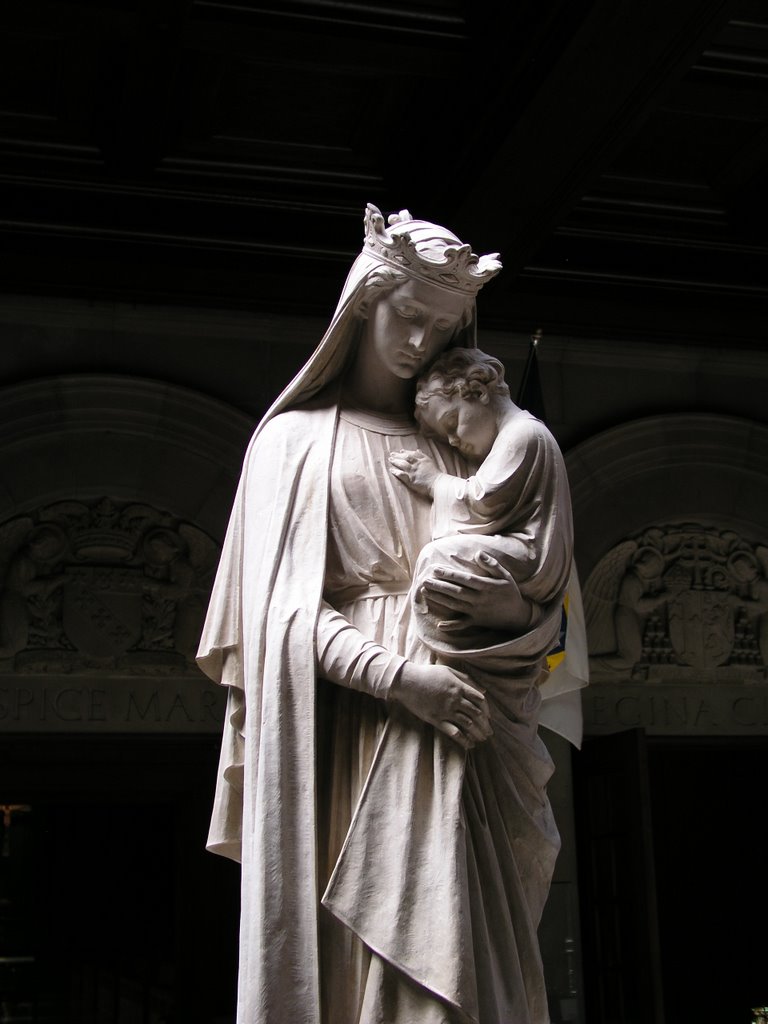
Sedes Sapientiae, ora pro nobis!