Hello!
Well... if you're reading this, then you're either new to this blog or a die-hard T.S.O.M. fan! It's been forever and a day since I've updated this blog. This semester has been pretty tough and frankly every time I sit down to update this thing I feel like I should be doing something else! But, it's a good hobby to have so I'll try to keep it up.
So, by popular demand from some seminarian brothers who've been bugging me and a couple friends who've checked in to see if I'm still alive, here's an update! For now, here's some pics from the summer.
In Jesu, per Mariam,
Matt

Sunday, October 22, 2006

Monday, August 28, 2006
the other
Well, I have tons to post about and a camera full of pics from the summer: my younger brother's wedding, my thoughts on my summer assignment, etc.
I'm back to seminary... which is awesome... and I'm very impressed by the new guys (wow... I'm not a new guy anymore...)
Anyway, tomorrow starts the opening retreat for the community here at St. Mary's. It's gonna be a good one, the itinerary is below. I'll be in monk-mode till Thursday. Please pray for me that this retreat bears much fruit for a holy and productive First Theology year.
ST. MARY’S SEMINARY & UNIVERSITY
THE 2006 OPENING COMMUNITY RETREAT
August 29-August 31, 2006
“Deus Caritas Est: Priestly Formation in Charity”
Given by the Rector and Faculty
Retreat Schedule
(All conferences will be in the Main Chapel)
Tuesday, August 29
11:30 a.m. Eucharistic Liturgy: Mass of the Holy Spirit
Presider and Homilist: Father Robert Leavitt, S.S.
12:15 p.m. Lunch (Refectory)
2:00 p.m. Conference 1: Father Robert Leavitt, S.S. “God is Love and Life Together”
4:30 p.m. Evening Prayer, Conference 2: Father Michael Barre, S.S. “I Have Loved You with An Everlasting Love”
5:30 p.m. Dinner (Refectory)
7:30 p.m. Meditative Rosary on the Joyful Mysteries Led by Father Hy Nguyen, S.S.
Strict Silence Begins
Wednesday, August 30
Breakfast (Refectory—In Silence)
9:00 a.m. Morning Prayer, Conference 3: Father Gladstone Stevens, S.S. “The Love of God and Divine Wisdom”
11:30 a.m. Eucharist Presider: Father Stevens, S.S.
Adoration of the Blessed Sacrament until Evening Prayer
12:15 p.m. Lunch (Refectory – In Silence)
2:00 p.m. Extraordinary Confessors available for Sacrament of Reconciliation (Locations posted)
4:30 p.m. Evening Prayer, Conference 4: Father Corbin Eddy “Liturgy as the Sign of Love”
Benediction of the Blessed Sacrament
6:00 p.m. Dinner (Refectory—In Silence)
8:00 p.m. Taize Meditative Prayer Led by Fr. Tony Perez, S.S.
Strict Silence continues through the Night
Thursday, August 31
Breakfast in silence (Refectory)
9:00 a.m. Morning Prayer, Conference 5: Father Philip Keane, S.S. “Love as the Foundation of Moral Life”
11:30 a.m. Conference 6: Father David Couturier, OFM Cap. “God’s Love, Human Resistance, and Priestly Service”
Strict Silence Ends
12:15 p.m. Lunch (Refectory)
2:00 p.m. Conference 7: Father Robert Leavitt, S.S. “Love and the Paschal Mystery”
Quiet Time for Prayer and Reflection
4:00 p.m. Covenant Liturgy Presider and Homilist: Robert F. Leavitt, S.S.
5:00 p.m. Social (Laubacher Hall)
5:30 p.m. Dinner (Refectory)
Guidelines for Quiet Time for Prayer and Reflection
I. A serene and quiet atmosphere pervades the whole house during the retreat, allowing the Holy Spirit to work in each individual, and respecting the Spirit’s work in others.
II. Spiritual conversations and shared prayer with others in small groups may take place.
III. Meal times are the appropriate place for fraternal interactions.
IV. During the retreat seminarians should avoid the use of electronic or digital devices (TV, computers, phones, game systems). Soft music facilitating reflection should not disturb others.
V. During the retreat normal business activity and external communications should be kept to an absolute minimum.
Guidelines for Strict Silence
I. During strict silence, seminarians avoid all noise and distractions completely to allow for deeper prayer and reflection in silence.
II. During strict silence, seminarians avoid even spiritual conversations and shared prayer with others. Brief and urgent communication should be done discreetly.
III. During strict silence, meal times become an opportunity for reflection and deeper communion with God.
IV. During strict silence, seminarians completely avoid the use of electronic, digital, or sound devices.
I'm back to seminary... which is awesome... and I'm very impressed by the new guys (wow... I'm not a new guy anymore...)
Anyway, tomorrow starts the opening retreat for the community here at St. Mary's. It's gonna be a good one, the itinerary is below. I'll be in monk-mode till Thursday. Please pray for me that this retreat bears much fruit for a holy and productive First Theology year.
ST. MARY’S SEMINARY & UNIVERSITY
THE 2006 OPENING COMMUNITY RETREAT
August 29-August 31, 2006
“Deus Caritas Est: Priestly Formation in Charity”
Given by the Rector and Faculty
Retreat Schedule
(All conferences will be in the Main Chapel)
Tuesday, August 29
11:30 a.m. Eucharistic Liturgy: Mass of the Holy Spirit
Presider and Homilist: Father Robert Leavitt, S.S.
12:15 p.m. Lunch (Refectory)
2:00 p.m. Conference 1: Father Robert Leavitt, S.S. “God is Love and Life Together”
4:30 p.m. Evening Prayer, Conference 2: Father Michael Barre, S.S. “I Have Loved You with An Everlasting Love”
5:30 p.m. Dinner (Refectory)
7:30 p.m. Meditative Rosary on the Joyful Mysteries Led by Father Hy Nguyen, S.S.
Strict Silence Begins
Wednesday, August 30
Breakfast (Refectory—In Silence)
9:00 a.m. Morning Prayer, Conference 3: Father Gladstone Stevens, S.S. “The Love of God and Divine Wisdom”
11:30 a.m. Eucharist Presider: Father Stevens, S.S.
Adoration of the Blessed Sacrament until Evening Prayer
12:15 p.m. Lunch (Refectory – In Silence)
2:00 p.m. Extraordinary Confessors available for Sacrament of Reconciliation (Locations posted)
4:30 p.m. Evening Prayer, Conference 4: Father Corbin Eddy “Liturgy as the Sign of Love”
Benediction of the Blessed Sacrament
6:00 p.m. Dinner (Refectory—In Silence)
8:00 p.m. Taize Meditative Prayer Led by Fr. Tony Perez, S.S.
Strict Silence continues through the Night
Thursday, August 31
Breakfast in silence (Refectory)
9:00 a.m. Morning Prayer, Conference 5: Father Philip Keane, S.S. “Love as the Foundation of Moral Life”
11:30 a.m. Conference 6: Father David Couturier, OFM Cap. “God’s Love, Human Resistance, and Priestly Service”
Strict Silence Ends
12:15 p.m. Lunch (Refectory)
2:00 p.m. Conference 7: Father Robert Leavitt, S.S. “Love and the Paschal Mystery”
Quiet Time for Prayer and Reflection
4:00 p.m. Covenant Liturgy Presider and Homilist: Robert F. Leavitt, S.S.
5:00 p.m. Social (Laubacher Hall)
5:30 p.m. Dinner (Refectory)
Guidelines for Quiet Time for Prayer and Reflection
I. A serene and quiet atmosphere pervades the whole house during the retreat, allowing the Holy Spirit to work in each individual, and respecting the Spirit’s work in others.
II. Spiritual conversations and shared prayer with others in small groups may take place.
III. Meal times are the appropriate place for fraternal interactions.
IV. During the retreat seminarians should avoid the use of electronic or digital devices (TV, computers, phones, game systems). Soft music facilitating reflection should not disturb others.
V. During the retreat normal business activity and external communications should be kept to an absolute minimum.
Guidelines for Strict Silence
I. During strict silence, seminarians avoid all noise and distractions completely to allow for deeper prayer and reflection in silence.
II. During strict silence, seminarians avoid even spiritual conversations and shared prayer with others. Brief and urgent communication should be done discreetly.
III. During strict silence, meal times become an opportunity for reflection and deeper communion with God.
IV. During strict silence, seminarians completely avoid the use of electronic, digital, or sound devices.
Pablo's Ordination
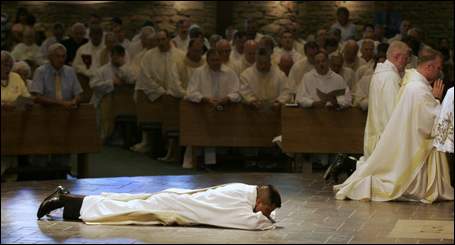
 A couple weeks ago, I had the pleasure and privilege of serving the Ordination to the Holy Priesthood of Pablo Hernandez for the Archdiocese of Louisville. (I served his Diaconate Ordination also)
Here is a collection of articles on the Ordination with some excerpts from each and my favorite pics.
First, the Press Release
From an article in The Record, "Deacon Hernandez’ vocation born at young age":
He was raised in a “very Catholic” family in his hometown of San Vicente, and he often went to Mass with them. But sometimes, as young as age 7, he would dress up, shine his shoes and go to church by himself. And he would always sit near the altar. It was “a sense of the sacred, the sense of being close to the altar,” he said in an interview last week in his office at the Basilica of St. Joseph Proto-Cathedral in Bardstown. “I loved to see the seminarians vested and the bishop processing in and processing out of church.” (read the rest here)
Another article in the Record, "Deacon Hernandez reflects on priesthood":
From an article in the Courier-Journal, "Journey of faith began in El Salvador":“The Lamb of God ... will be my logo, the distinctiveness of my priesthood, my theme,” he said in an interview before his ordination at 11 a.m. Aug. 12 at St. James Church in Elizabethtown, Ky.
He said his “image of the priesthood” is “sometimes being the good shepherd, sometimes being the lamb, being sacrificed.”
But the image he prefers is that of the “sacrificial lamb, (to) give your life for the sake of others. In that sacrificial act, there is joy.”
He explained: “I want to do (this) because Jesus is our prototype. He is the Lamb. When he sacrificed for us, he suffered because he loved us, and (there) was joy in his action.” (read the rest here)
Hernandez was ordained a deacon in his native San Vincente in December, a festive event attended by some representatives from the Louisville archdiocese. But shortly thereafter, he suffered serious burns on his legs in a fireworks accident, and underwent skin grafts. The injury delayed his graduation and ordination, originally scheduled in May.
"I learned suffering" from that experience, Hernandez said. "For me, suffering is a blessing, a redeeming experience," enabling him to relate both to Jesus and the sufferings of the people to whom he'll minister. (read the rest here)


Here is a link to a Photo Gallery of the Ordination from the C-J. My favorite pics:

Thursday, August 17, 2006
the Solemnity of the Assumption of the Blessed Virgin Mary
At my parish assignment this summer, with Fr. Bob Ray at St. Jerome in Fairdale and St. Mary in Hillview, I was given the opportunity to plan the liturgy for the Solemnity of the Assumption of the Blessed Virgin Mary. This was my first time planning a liturgy so the task was a little daunting. Plus, I wanted it to be perfect because this particular solemnity means a great deal to me. I consecrated myself to Jesus, through Mary when I first entered seminary and this solemnity is also the patronal "feast" of the Archdiocese and one of the parishes to which I was assigned. I wanted it to be solemn and reverent and expose the two congregations to the richness of traditional Catholic liturgy that they normally don't experience throughout the year. But, alas, this isn't my liturgy per se, it's not mine to do with as I please. It's the heavenly liturgy in which we participate. At the same time though, we are given the task of doing are part in the celebration to ensure that it parallels the heavenly liturgy as closely as our feeble minds can imagine it while keeping the needs and the faith of the people in mind. At least that's what I think the Mass should be... that was the task I gave myself. And Fr. Ray was very open to my suggestions... actually he indulged me quite a bit! I must admit I was in hog-heaven... excuse the bad pun.
Anyway, here's how the Mass was planned:
First I enlisted Sarah Nettleton, a professional cantor and one of the head cantors at St. Marin of Tours. This is the only parish in the Archdiocese with the indult to say the Tridentine Mass and they have a truly angelic choir. She was very instrumental (excuse another bad pun) in helping me plan the music for the Mass and construct the participation aid so that the faithful could more easily follow along.
Processional Hymn: "Immaculate Mary"
Introit (Latin Chant)
Confiteor (English, recited)
Kyrie (Greek Chant)
Gloria (English, recited)
First Reading
Responsorial Psalm (sung)
Second Reading
Gradual (Latin Chant)
Gospel Acclamation
Gospel
Homily
Nicene Creed
Prayers for the Faithful
Offertory (Latin Chant)
Preparation of the Gifts: "Let All Mortal Flesh Keep Silence"
Sanctus (Latin Chant)
Great Amen
Memorial Acclamation (sung)
Agnus Dei (Latin Chant)
Communion Chant (Latin)
Communion Hymn: "O Thou, Who at Thy Eucharist Didst Pray"
Communion Meditation: "Ave Maria" (Gregorian Chant)
Recessional Hymn: "Hail, Holy Queen Enthroned Above"
I wore a cassock and surplice I had borrowed from a friend at seminary (to wear to serve my younger brother's wedding) and enlisted four children from the Philipines who were parishioners and used to traditional liturgy. We had incense at the procession, blessing of the altar and crucifix, the gospel, and the blessing of the gifts and people. And we had torch-bearers for the gospel as well. The only things we didn't have were incense and bells at the consecration (which Father and I agreed wouldn't have worked logistically). In my humble opinion, it was a beautiful liturgy and both parishes seemed to enjoy the experience. My hope is that it maybe enkindled or rekindled an appreciation for Latin, the treasury of Catholic hymnody, and solemn liturgy.
"Sursum corda"
"Habemus ad Dominum"
"Lift up your hearts"
"We have lifted them up to the Lord"
St. John Vianney, pray for us
Anyway, here's how the Mass was planned:
First I enlisted Sarah Nettleton, a professional cantor and one of the head cantors at St. Marin of Tours. This is the only parish in the Archdiocese with the indult to say the Tridentine Mass and they have a truly angelic choir. She was very instrumental (excuse another bad pun) in helping me plan the music for the Mass and construct the participation aid so that the faithful could more easily follow along.
Processional Hymn: "Immaculate Mary"
Introit (Latin Chant)
Confiteor (English, recited)
Kyrie (Greek Chant)
Gloria (English, recited)
First Reading
Responsorial Psalm (sung)
Second Reading
Gradual (Latin Chant)
Gospel Acclamation
Gospel
Homily
Nicene Creed
Prayers for the Faithful
Offertory (Latin Chant)
Preparation of the Gifts: "Let All Mortal Flesh Keep Silence"
Sanctus (Latin Chant)
Great Amen
Memorial Acclamation (sung)
Agnus Dei (Latin Chant)
Communion Chant (Latin)
Communion Hymn: "O Thou, Who at Thy Eucharist Didst Pray"
Communion Meditation: "Ave Maria" (Gregorian Chant)
Recessional Hymn: "Hail, Holy Queen Enthroned Above"
I wore a cassock and surplice I had borrowed from a friend at seminary (to wear to serve my younger brother's wedding) and enlisted four children from the Philipines who were parishioners and used to traditional liturgy. We had incense at the procession, blessing of the altar and crucifix, the gospel, and the blessing of the gifts and people. And we had torch-bearers for the gospel as well. The only things we didn't have were incense and bells at the consecration (which Father and I agreed wouldn't have worked logistically). In my humble opinion, it was a beautiful liturgy and both parishes seemed to enjoy the experience. My hope is that it maybe enkindled or rekindled an appreciation for Latin, the treasury of Catholic hymnody, and solemn liturgy.
"Sursum corda"
"Habemus ad Dominum"
"Lift up your hearts"
"We have lifted them up to the Lord"
St. John Vianney, pray for us
Sunday, July 30, 2006
Archbishop Kelly links
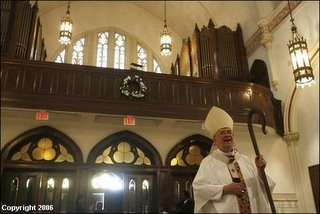
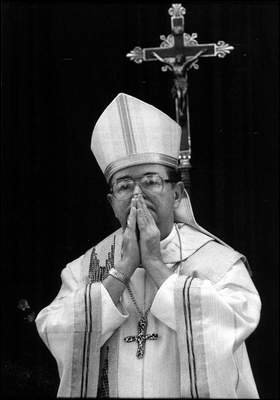
Here's some links to recent articles and features in The Courier-Journal on Archbishop Kelly. I wanted to post them here so I didn't lose them.
 Reflections of an archbishop
Vatican trends might offer hints to profile of Kelly's successor
Archbishop Kelly: Audio Slideshow and interview excerpts
Archbishop Kelly, recent years
Archbishop Kelly, early years
Some of my favorite pics of him:


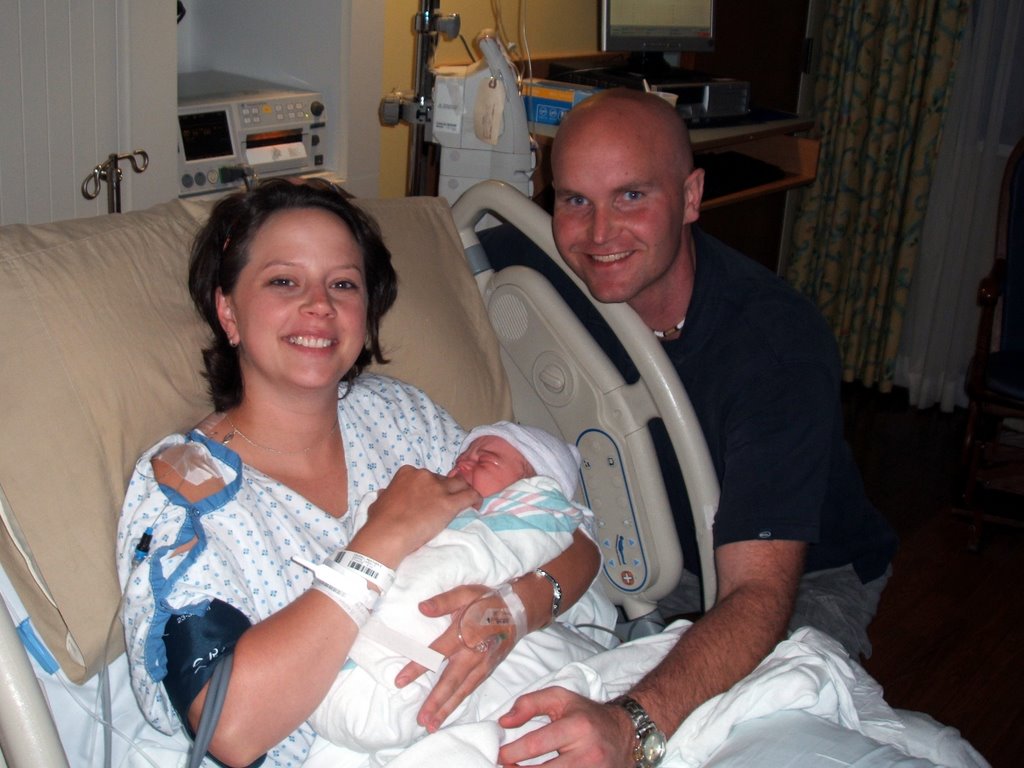
Heather's Baby!
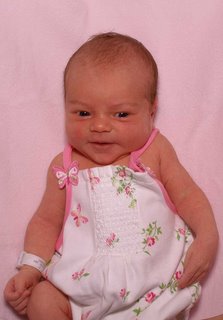
Another one of my best friends, Heather, had a baby too! Deo Gratias!
07/25/2006, 12:21am, 6 lbs. 9 oz., 19.5 in.


07/25/2006, 12:21am, 6 lbs. 9 oz., 19.5 in.


Tuesday, July 25, 2006
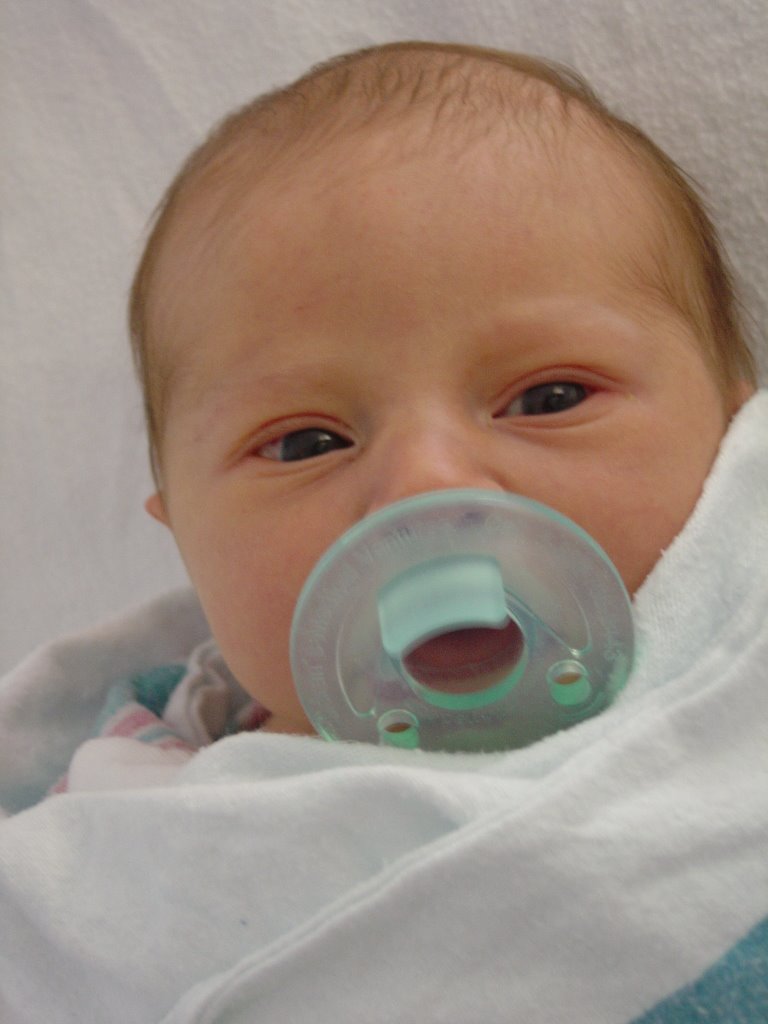
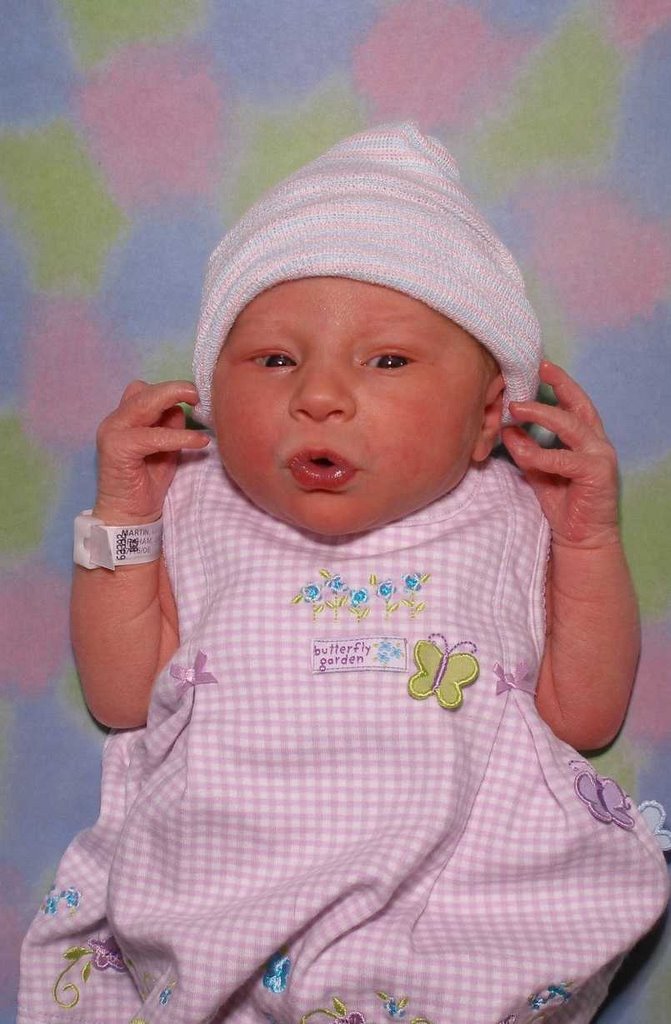
Laura's Baby!
Well, I'm finally getting around to posting pics of Laura Di's baby, Riley Nicole! Laura's one of my best friends. Everyone say a prayer of thanks!
Riley Nicole was born on July 15, 12:04pm, 7lb. 8oz., 20.5in.


Riley Nicole was born on July 15, 12:04pm, 7lb. 8oz., 20.5in.
Sunday, July 16, 2006
happy birthday
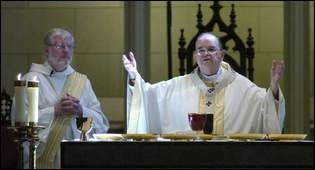 I would like to wish our Archbishop Thomas Kelly a belated, happy and holy 75th birthday, celebrated Friday, July 14. This is also the day when he submitted his resignation to the Vatican. He indicated he did so at the Church Teaches Forum today. I pray that the Holy Spirit will bless him richly during the remaining months of his ministry.
Here's an article from the Courier-Journal. Some excerpts:
"The appointment could come sooner and could take a bit longer, though most appointments now are occurring within this 18-month time frame," Kelly wrote last month in his column in the Record, the archdiocesan newspaper.Read the rest...
In The Record, Kelly wrote: "I hope you don't mind waiting. Until the arrival of the next Archbishop, I hope you can put up with me, long in the tooth but a shepherd who loves his priests and people and who will continue to do his best to serve them."
"Whenever there's change there's also apprehension," said the Rev. Tony Smith, president of the Priests' Council of the archdiocese. He said Kelly has "been a wonderful bishop, giving great guidance in pastoral care. In that sense, there's apprehension about any new bishop coming in -- will he follow in that same pastoral mode?"
"Under Paul VI there was a great effort to look for pastoral bishops, bishops who were good at working with their people and … their priests," Reese [senior fellow at the Woodstock Theological Center] said. He said Kelly was a carryover from that style, even though he became a bishop in the early years of Pope John Paul II. Mostly under John Paul II, "the real priority was to find bishops who were loyal to the Vatican" in the face of dissent over issues such as the church's prohibition on artificial birth control. "The result has been a much more conservative hierarchy in the United States," he said.
Saturday, July 15, 2006
the Church Teaches Forum
 Today I went to Day Two of the Church Teaches Forum in Louisville, KY. I missed Day One on Friday because I wanted to be at my parish's Church Picnic which is a huge, humongous deal. I worked the Watermelon booth :)
This morning I met a large group of other Catholics at the abortion clinic at 7am to pray for a couple hours for an end to abortion. Then I went with a couple priests to the Forum which started at 9am. The lineup included: Cardinal Arinze (!), Archbishop Foley, Archbishop Raymond Burke, Fr. McCaffrey, and Fr. Arnsparger with brief introductions given by our own Archbishop Kelly, James Likoudis, Pat Monaghan, Leon Suprenant, et al. It was a pretty awesome day and I enjoyed getting to know newly-ordained Fr. Jeffrey Hopper a little better.
Brief Rundown:
Cardinal Arinze: The Laity: Humility and Obedience in the Apostolate - and - Sacred Music and the Liturgy as Means of Evangelization
Archbishop Foley: The Role of Believers in the Rise of Atheism - and - Social Communications and Evangelization
Archbishop Burke: Obedience to the Magesterium and the Responsibility of the Bishop Toward the Laity
Fr. McCaffrey: Deus Caritas Est: The Virgin Mary's Fiat at the Annunciation
Fr. Arnsparger: The Call of Christ to the Priesthood: Hearing It - Living It
crimson collum
 Earlier this week I had an awesome little vacation with two priests from the Archdiocese: Whitewater rafting and mountain biking in West Virginia. This is an annual event and the second time I've participated.
We were supposed to spend two days rafting but our first day was a little rough. The water level was high which meant we had to let into the New River at an earlier point than ususal thus making the day longer: about 5 hours. Add to that, we had two newbies at the front of our raft which is the pace-setting position. They didn't follow our guide's commands very well at all which made the rest of the raft have to row more often and harder.
The rapids were great, with a few class V's, and it was a fun run but we were beat at the end of the day. When day 2 came around we didn't feel like rafting again so we decided to apply the funds to something else: mountain biking. I was a little intimidated by this because I've never been very athletic and haven't been on a bike in like 10 years... let alone know how to work the 24 speeds on the bikes we rented! But, we were all in pretty much the same shape and were wore out just riding to the park where we could choose our trail! We decided to pick a 1.1 mile loop for starters. I think we carried our bikes half the trail! None of us could figure out the gears. But I decided to give it one more try and this time I had a blast. When I figured out the proper gears to use and how to shift them it was a lot more worth the effort. There were some tough up-hills on the short trail but they made for some exciting down-hills as well. I was pretty proud of myself for stretching what I thought I was capable of... Next year... ATV's!

If you ever have any inkling whatsover to go whitewater rafting in West Virginia, especially on the New River or the Gauley River, don't settle for anything less than Class VI River Runners. They are THE BEST. Period. (excellent facilities, brand new cabins, EXPERT guides who value safety over hijinks [go with Eric], pull-over off the river for a complete homemade lunch, a kayaker who films your entire trip then puts together a DVD while you clean up in their excellent shower facilities, cold drinks of your choosing waiting in a cooler when you get off the river, and a nice, fun bar to relax afterwards with some beer and wings as you watch your trip video on a big screen with the rest of the rafters and guides.)
new vocation office site
 The Archdiocese of Louisville's Vocations website is back up! Even though its integrated into the Archdiocese's website, and not on its own (like the one for my hometown diocese), I'm impressed with it. Check it out!
Monday, July 10, 2006
much
Ah man, I've been bad about posting and so much stuff has happened! My parish assignment is going really well. I had to put together a seminar for new and current lectors which went really well (maybe I'll post what I prepared), and I just gave my vocation story to the young adult group MOCA (Ministry of Catholic Adults) at my parish... which went really well too!
I just got back from a weekend of... uh... irreverence... ;) camping with all the guys in my family. It's a yearly thing... all the uncles, sons, dads, cousins get together and camp out at Lincoln Forest in southern Indiana. This time we celebrated my younger brother's Bachelor's Party as well so some of his friends came too. It's phenomenologically perplexing how often and easily we fall to the lowest moral common demoninator isn't it? (anyone have any comments to this point?) Thankfully I'm blessed to have family and friends who really respect what I'm doing, discerning the preisthood and all. I kept the swearing and bad jokes to a minimum this year.
Tomorrow I leave with two other priests from the Archdiocese and two other guys to go white-water rafting on the New River in West Virginia till Thursday then Friday and Saturday is my parish's summer picnic. After that, a retreat to Red River Gorge for hiking and camping with some guys in discernment. Tons of fun ahead!
Blessed Mother, pray for us.
I just got back from a weekend of... uh... irreverence... ;) camping with all the guys in my family. It's a yearly thing... all the uncles, sons, dads, cousins get together and camp out at Lincoln Forest in southern Indiana. This time we celebrated my younger brother's Bachelor's Party as well so some of his friends came too. It's phenomenologically perplexing how often and easily we fall to the lowest moral common demoninator isn't it? (anyone have any comments to this point?) Thankfully I'm blessed to have family and friends who really respect what I'm doing, discerning the preisthood and all. I kept the swearing and bad jokes to a minimum this year.
Tomorrow I leave with two other priests from the Archdiocese and two other guys to go white-water rafting on the New River in West Virginia till Thursday then Friday and Saturday is my parish's summer picnic. After that, a retreat to Red River Gorge for hiking and camping with some guys in discernment. Tons of fun ahead!
Blessed Mother, pray for us.
Tuesday, June 27, 2006
Hello all
I'm still alive. Mid-May though mid-June I was on an extended spiritual retreat at St. Mary's and for the last week or so I've been assigned to a couple parishes in Louisville (in a rectory without my own Internet access) so I haven't been able to post in a while.
I hope to post more soon...
I hope to post more soon...
Monday, June 05, 2006
Louisville Ordinations
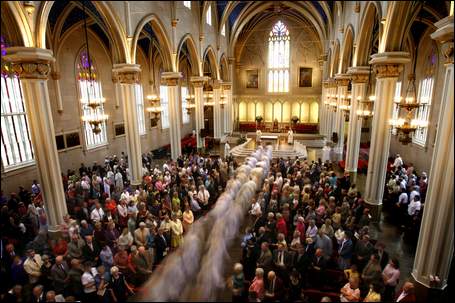 The weekend before last, it was a great joy of mine to be a part of the ordination of two Deacons to the Holy Priesthood for the Archdiocese of Louisville. It was a hectic trip tho! Flying home, I couldn't get on the plane because they oversold it (but I was compensated). I was put on standby for the next flight and, thankfully, I was able to get on. That was a miracle because it was Memorial Day weekend and every other flight that day on every other airline that flies out of BWI was booked solid.
Flying back, my plane was delayed three times. I should have arrived in Baltimore at 9:30pm but didn't arrive till 1:45am.
But anyway, it was an honor to be a part of the ordination Mass; I was the crossbearer. I also had a fun time staying with my d.b., Mike, at the Cathedral Rectory. The whole weekend made me want to be a priest, like, tomorrow.
Here's a pic of me in the Courier-Journal pretending to be a Swiss Guard before the Mass:
 Matt Hardesty, right, and Christopher Rhodes, both Catholic seminarians, stand at the front of the Cathedral of the Assumption prior to the start of the ordination ceremonies. "It's a great honor to be a part of this," Hardesty said. "It definitely strengthens my discernment and my hope for the future."
For More:
A Photo Gallery, from the C-J, of the Ordination
An article from the C-J: "Fathers Find Their Second Calling"
An article from The Record on Fr. Wally Dant: "Deacon Dant lived full life before entering the seminary"
An article from The Record on Fr. Jeffrey Hopper: "Deacon Jeffrey Hopper eager to serve, celebrate Eucharist"
I love what Fr. Hopper says here:
“What I’m looking forward to the most is offering the sacrifice of the Mass and doing the pastoral duties of a priest — hearing confession, visiting the hospital, going to the school with the kids”
my Record article
Here's my recent article in Louisville's archdiocesan newspaper, The Record:
Young Adult Life
Young seminarian offers a reflection on his first year of studies
Matthew Hardesty
Guest Columnist
“Be renewed in the spirit of your mind: And put on the new man, who according to God is created in justice and holiness of truth.” (Ephesians 4:23-24)
The Record, May 24, 2006 -
Young Adult Life
Young seminarian offers a reflection on his first year of studies
Matthew Hardesty
Guest Columnist
“Be renewed in the spirit of your mind: And put on the new man, who according to God is created in justice and holiness of truth.” (Ephesians 4:23-24)
The Record, May 24, 2006 -
I have been thinking much about this particular verse in Scripture as I approach the end of my first year of seminary at St. Mary Seminary and University in Baltimore.
Benedictine Abbot Lambert Reilly, former archabbot of St. Meinrad Archabbey in Indiana, translates the first part of this passage to say, “Your inmost being must be renewed.” Certainly, deep and profound change must occur in a young man from the time he enters seminary to the time, God willing, he is ordained. I would like to share with you some thoughts on my first year of this formation.
Much has happened since I last wrote in this space about my initial reactions to seminary. I am now more confident in life at the seminary and have grown accustomed to the daily routine of prayer and classes. During my second semester I have taken the second half of introduction to Catholic theology, philosophical ethics, Latin I, introduction to Scripture, history of philosophy II and metaphysics.
Philosophy has been stimulating but also challenging as it prepares me for theological studies. But life at St. Mary’s has not been totally consumed with classes. There have been many other experiences throughout the year that have contributed to my overall growth.
I have been able to pray twice a month with other seminarians at the local abortion clinic to practice the theological virtues that we learn about in class. And going to the March for Life in Washington, D.C., in January, with the entire seminary community, was a wonderful opportunity to witness with others to the Gospel of life on a broad scale.
My “pastoral placement” has also brought me much fulfillment. Three other seminarians and I develop the necessary pastoral skills we will need to serve the people of God by tutoring inner-city adults, young and old, who are studying for the general education development (G.E.D.) test. Their motivation and initiative are inspirational.
I am glad to be able to share the gifts that the Lord has given me, and am honored to listen to the many different stories of those who have decided to change their lives, with the G.E.D. as a first step to making this happen. Our study sessions have also given me the opportunity to practice sharing my faith with others in many different ways.
For me, perhaps the most important experiences have been the various liturgies that I have participated in. There have been large Masses, such as the Vigil Mass for Life before the march in Washington and the Mass celebrating the 50 years of priesthood and 25 years of episcopacy of Baltimore’s Cardinal William Keeler.
Being able to attend smaller Masses at different parishes throughout the Archdiocese of Baltimore has given me a greater appreciation for the universality and diversity of the Catholic church. The daily liturgies at St. Mary’s also have given me the spiritual nourishment I need to continue in formation and to grow in holiness.
Receiving the Ministry of Lector, making me an “official” reader at Mass, has been a tremendous blessing. Serving at different parishes in Louisville during Christmas and Easter breaks also has brought me closer to the altar and given me a taste for what God holds for me in the future.
Your prayers and support have helped me tremendously, as have your letters and cards, such as those from the students at Immaculate Conception in LaGrange, Ky. They bring me much joy.
This summer I will be staying in the rectory at St. Rita Church on Preston Highway and working with Father Robert Ray at St. Jerome Church in Fairdale, Ky., and St. Mary Church in Bullitt County. Please pray for me as I enter this next step in my formation, that through Mary’s intercession I might grow “in justice and holiness of truth.”
Matthew Hardesty is a young adult seminarian at St. Mary Seminary and University in Baltimore.
Sunday, June 04, 2006
wow
Last weekend: Awesome Louisville ordination... I'll post articles and pics soon
This past weekend: Project Rachel retreat in the Diocese of Raleigh, N.C.... one of the most powerful things I've ever experienced in my entire life... totally strengthened my vocation... I'll write more later...
This past weekend: Project Rachel retreat in the Diocese of Raleigh, N.C.... one of the most powerful things I've ever experienced in my entire life... totally strengthened my vocation... I'll write more later...
Thursday, June 01, 2006
Pope thanks Mary for her protection
VATICAN CITY, JUN 1, 2006 (VIS) - At 8 p.m. yesterday, the traditional procession marking the end of the month of May wound its way from the Church of St. Stephen of the Abyssinians - located near the apse of the Vatican Basilica - to the Grotto of Lourdes in the Vatican Gardens. Hundreds of people participated in the ceremony, which was presided by Archbishop Angelo Comastri, His Holiness' vicar general for Vatican City State.
Benedict XVI arrived at the Grotto at 9 p.m. and, before imparting his apostolic blessing, delivered a brief address.
The Pope first recalled how this year the month of May was "characterized by the arrival of the image of the Virgin of Fatima in St. Peter's Square on the 25th anniversary of the assassination attempt against the beloved John Paul II, and also by my apostolic trip ... to Poland, where I was able to visit the places dear to my great predecessor."
At the Shrine of Jasna Gora in Czestochowa, he said, "I understood how much our celestial Protectress accompanies her children's journey, and does not disregard supplications addressed to her with humility and faith. Once again, together with you, I wish to thank her for having accompanied me during my visit to the dear land of Poland. I also wish to express my gratitude to Mary for her support in my daily service to the Church. I know I can rely on her help in all situations, indeed I know that she, with maternal intuition, meets all her children's needs and intervenes effectively in their support."
Benedict XVI then highlighted how in the Virgin Mary's visit to her cousin Elizabeth - which the Church celebrates today as the Feast of the Visitation of Mary - "the hidden protagonist is Jesus. Mary carried Him in her womb as in a sacred tabernacle. ... Wherever Mary goes, there is Jesus."
"May true Marian devotion never obscure or diminish faith and love for Jesus Christ, our Savior, the only mediator between God and man. ... Let us, then, entrust ourselves to her with filial devotion."
The Pope concluded his address by asking the faithful to pray especially for the forthcoming vigil in St. Peter's Square on Saturday, June 3, when he will meet with new lay movements and communities "those promising groups that have blossomed in the Church following Vatican Council II."
Mary, the school of faith
VATICAN CITY, MAY 26, 2006 (VIS) - At 5.15 p.m. today, Benedict XVI arrived by helicopter at the Polish city of Czestochowa to visit the Shrine of the Virgin of Jasna Gora, Poland's most famous Marian shrine, where John Paul II confided his pontificate to the Mother of God.
The image of the Virgin of Jasna Gora is decked with new vestments, in fulfillment of a vow to mark the 350th anniversary of the defense of her shrine against Swedish troops by Fr. Augustin Kordecki, and as an expression of gratitude for the life of John Paul II on the 25th anniversary of the birth of the "Solidarnosc" trade union. The image's golden crowns were blessed and offered by John Paul II on April 1 2005, the eve of his death.
At 6 p.m., having visited the convent of the shrine, which is under the care of the Pauline Fathers, the Holy Father met with religious, seminarians and representatives from Catholic movements and institutes of consecrated life.
In his address to the them, Pope Benedict began by affirming that "Mary, the Mother of the Lord, is among us. Today it is she who leads our meditation; she teaches us how to pray. Mary shows us how to open our minds and our hearts to the power of the Holy Spirit, Who comes to us so as to be brought to the whole world."
"Mary sustained the faith of Peter and the Apostles in the Upper Room, and today she sustains my faith and yours," said the Pope. "Faith is contact with the mystery of God. ... It is the gift, given to us in Baptism, which makes our encounter with God possible. God is hidden in mystery; to claim to understand Him would mean to want to confine Him within our thinking and knowing, and consequently to lose Him irremediably. With faith, however, we can open up a way through concepts, even theological concepts, and can 'touch' the living God."
"In the Upper Room the Apostles did not know what awaited them. They were afraid and worried about their own future. ... Mary, 'she who believed in the fulfillment of the Lord's words,' ... taught perseverance in the faith. By her own attitude she convinced them that the Holy Spirit, in His wisdom, knew well the path on which He was leading them, and that consequently they could place their confidence in God."
"Many of you here present have experienced this secret call of the Holy Spirit and have responded. ... It was Jesus who called you, inviting you to a more profound union with Him."
"Do you remember," the Holy Father asked the religious, "your enthusiasm when you began the pilgrimage of the consecrated life, trusting in the grace of God? Try not to lose this first fervor, and let Mary lead you to an ever fuller adherence."
He cried: "Dear men and women religious, dear consecrated persons! Whatever the mission entrusted to you, ... maintain in your hearts the primacy of your consecrated life" which, "lived in faith, unites you closely to God, calls forth charisms and confers an extraordinary fruitfulness to your service."
Turning to address seminarians, the Pope recommended they reflect "on the way Mary learned from Jesus! From her very first 'fiat,' through the long, ordinary years of the hidden life, as she brought up Jesus, ... she 'learned' Him moment by moment. ... On your journey of preparation, and in your future priestly ministry, let Mary guide you as you 'learn' Jesus. Keep your eyes fixed on Him. Let Him form you, so that in your ministry you will be able to show Him to all who approach you."
"The vitality of your communities," Benedict XVI told representatives of the new movements in the Church, "is a sign of the Holy Spirit's active presence! It is from the faith of the Church and from the richness of the fruits of the Holy Spirit that your mission has been born. ... Believe in the grace of God which accompanies you and bring it into the living fabric of the Church, especially in places the priest or religious cannot reach."
"You are nourished," he continued, "by different schools of spirituality recognized by the Church. Draw upon the wisdom of the saints, have recourse to the heritage they have left us. Form your minds and your hearts on the works of the great masters and witnesses of the faith, knowing that the schools of spirituality must not be a treasure locked up in convents or libraries.
"The Gospel wisdom, contained in the writings of the great saints and attested to in their lives, must be brought in a mature way, not childishly or aggressively, to the world of culture and work, to the world of the media and politics. ... The authenticity of your faith and mission, which does not draw attention to itself but truly radiates faith and love, can be tested by measuring it against Mary's faith. ... Remain in her school!"
"God is love," the Holy Father concluded, "These were the words that I placed at the beginning of the first Encyclical of my pontificate. ... This is the most important, most central truth about God. To all for whom it is difficult to believe in God, I say again today: 'God is love.' Dear friends, be witnesses to this truth."
At the end of the meeting, Benedict XVI returned by helicopter to Krakow where, after dinner, he appeared at the balcony of the archbishop's palace to greet people gathered in the street below, following a custom of John Paul II when he visited Krakow.
"I know," he told them, "that on the second of each month, at the time my beloved predecessor died, you meet here to commemorate him and pray for his elevation to the honors of the altar. May this prayer be of support to those who concern themselves with his cause [of beatification] and enrich your hearts with grace."
"Despite his death, he - young in God - is among us, he invites us to reinvigorate the grace of faith and renew ourselves in the Spirit."
Monday, May 22, 2006
Kass and Hume on Phenomena
I redeem myself a little bit with this paper: Kass and Hume on Phenomena
Ovid, an early first-century Roman poet, paints a beautiful picture of the contrast between animals and man. It is a simple statement but rich with meaning: “And, though all other animals are prone, and fix their gaze upon the earth, he gave to man an uplifted face and bade him stand erect and turn his eyes to heaven.”[1] The beauty of this statement is that despite its simplicity it prompts us to naturally ask, “Why?” Why does man stand erect while the animals are prone? What does his posture illustrate about him? Why is his face uplifted? What in the heavens captures his gaze? What can he see and do now with this posture that he could not see and do before? What is the reason for this human phenomenon and why is it his? Is this good for man?
It does not take a zoologist, a biologist, an anthropologist, or other scientist to ask these questions, we can expect them from anyone. And if the common man can ask them, should not the scientist who has a more astute curiosity be all the more able to? We would think so. But, a careful look at modern science reveals a glaring inability to ask the most natural questions of the phenomena we encounter in the world.
Rather than ask the above, modern science would ask, “How is it that man stands erect? Is it the strength of his hind legs? How does he hold up his head? Is it the ligaments in his neck? How does he fix his gaze? Is psychology at play? Is he daydreaming? How does his brain create his state of daydreaming?
Here, Dr. Leon R. Kass, M.D., former chairman of the President’s Council on Bioethics, draws the appropriate conclusion in his book, The Hungry Soul.[2] What is revealed in Ovid’s statement and “other such simple natural facts, accessible to us through the testimony of our own lived experience, can provide a royal road to appreciating what we are and discovering what we might become.” But, unfortunately, he goes on to say, “we have lost our way in the world partly because we no longer believe that our ordinary experience of life in the world may be the privileged road to the deepest truth.”[3]
The questions we noted above, those of modern science, presuppose a view of nature, what Kass would call nature as “blind, mechanical, mindless, and aimless.” But isn’t the scientific community a rather elite group, small in number compared to the total population? Why should we be concerned with this dilemma? Kass would reply that while most of us are not scientists,
First, what is phenomena? The word itself is the plural form of the word “phenomenon” which is derived from the Greek “phainomenon,” literally meaning something that can be seen, or an appearance.[5] For our purposes, the phenomena, or the appearances of nature, on which a philosopher chooses to focus can be very revealing. While Aristotle and St. Thomas Aquinas, for example, chose to focus on “plants and animals; the heavens; living kinds; substantial and accidental change or generation and corruption,” Hume turned to “the pain of excessive heat, the pleasure of moderate warmth;” anger, inertia, billiard balls, and weighted figures in motion.[6] He chose too look at “earth, water, and other elements” rather than living organisms. The ordinary natural wholes that we experience and encounter every day are absent from Hume’s phenomenology. And when we look at his popular work, An Enquiry Concerning Human Understanding,[7] we see that this is quite deliberate and in fact a strategic move in his ideology for science.[8] We will look at this ideology later, for now, we have come to our first contrast with Kass.
Kass’s book, The Hungry Soul, follows in Aristotle and Aquinas’ footsteps and is about “deeper desires, appetites, and longings as they reveal themselves in human eating.” Furthermore, eating, “like other activities in which human beings and animals engage, is an activity of whole, unified, formed, living, active, sensitive, and desiring beings.”[9] But Hume, in a similar example in An Enquiry, is skeptical of man’s ability to learn anything from this phenomena concerning its motivations or meaning: “Our senses inform us of the colour, weight, and consistence of bread; but neither sense nor reason can ever inform us of those qualities, which fit it for the nourishment and support of a human body” He even goes on to say that “nature throws a bar to all our enquiries concerning causes, and reduces us to an acknowledgment of our ignorance.”[10]
Aristotle and Aquinas (and now Kass) observed the phenomena in their everyday world and allowed them to naturally disclose their meaning and purpose. They then, through metaphysics, moved from the phenomena to a study of the principles and causes that animate them. From these they discovered both the superficial and underlying truth of the phenomenal forms they beheld. But Hume, and much of modern science today, has no use for the metaphysical causes of the phenomena they study. The truth they seek is, again, in the question “How?” not in the questions “What?” or “Why?” They reject the latter questions as being the mere “inevitable source of uncertainty and error.” To Hume classical metaphysics is not “properly a science” and arises either from “the fruitless efforts of human vanity, which would penetrate into subjects utterly inaccessible to the understanding, or from the craft of popular superstitions, which… raise these entangling brambles to cover and protect their weakness.”[11]
To this end, Hume moves the focus away from the observable natural phenomena to the inner-workings of the mind of the observer. Therein lays the truth of what he sees. In making this move he seeks to liberate modern science from the “obscurity, painfulness and fatigue” of classical metaphysics and here we see his ideology. Only in the “secret springs and principles by which the human mind is actuated in its operations” do we really find clarity:
Our last contrast with Kass will be one concerning connections. We return now to the phenomenon of human eating. Kass observes in the Introduction to The Hungry Soul that the world is arranged so as to contain “deep connections among human eating, human freedom, and human moral self-consciousness. It is these connections that we here seek to discover. We, too, seek wisdom through eating; eating is the manifest theme of this inquiry.”[13] With Kass, we see an inquiry that is motivated by a desire to discover deep meaning in the phenomenon he has chosen to explore. But the main point here is that there are real, fertile connections between phenomena on one hand and meaning, purpose, truth, goodness, beauty and the “just, noble, and holy” on the other. And similar connections, also disclosed by phenomena, can even be found between nature and ethics. But, Kass adds,
[1] Metamorphoses (1.84-86) from Kass, p. 57 (see note 2)
[2] The Hungry Soul: Eating and the Perfecting of Our Nature, by Leon R. Kass, M.D., The University of Chicago Press, ©1999. Hereafter referred to as “Kass”
[3] Ibid, p. xv, 8
[4] Ibid, p. 7
[5] Also from neuter present participle of phainesthai, to appear. (The American Heritage® Dictionary of the English Language, Fourth Edition Copyright © 2004, 2000 by Houghton Mifflin Company)
[6] From the document “David Hume’s an Enquiry concerning Human Understanding,” David Hume I.doc, 3/25/2006, by Dr. Paul Seaton
[7] An Enquiry Concerning Human Understanding, second edition, edited by Eric Steinberg, Hackett Publishing Company, ©1993. Hereafter referred to as “Hume”.
[8] Idea from Dr. Paul Seaton given in conversation, 5/3/2006
[9] Kass, p. xiii, emphasis mine, and p. 11
[10] Hume, p. 21, 40
[11] Ibid, p. 5
[12] This train of thought from the Hume document noted above (note 6) and Hume, p. 8
[13] Kass, p. 1
[14] Ibid, p. 4-5
[15] Hume, p. 41-42
[16] Kass, p. 9
[17] Ibid, p. 12
Ovid, an early first-century Roman poet, paints a beautiful picture of the contrast between animals and man. It is a simple statement but rich with meaning: “And, though all other animals are prone, and fix their gaze upon the earth, he gave to man an uplifted face and bade him stand erect and turn his eyes to heaven.”[1] The beauty of this statement is that despite its simplicity it prompts us to naturally ask, “Why?” Why does man stand erect while the animals are prone? What does his posture illustrate about him? Why is his face uplifted? What in the heavens captures his gaze? What can he see and do now with this posture that he could not see and do before? What is the reason for this human phenomenon and why is it his? Is this good for man?
It does not take a zoologist, a biologist, an anthropologist, or other scientist to ask these questions, we can expect them from anyone. And if the common man can ask them, should not the scientist who has a more astute curiosity be all the more able to? We would think so. But, a careful look at modern science reveals a glaring inability to ask the most natural questions of the phenomena we encounter in the world.
Rather than ask the above, modern science would ask, “How is it that man stands erect? Is it the strength of his hind legs? How does he hold up his head? Is it the ligaments in his neck? How does he fix his gaze? Is psychology at play? Is he daydreaming? How does his brain create his state of daydreaming?
Here, Dr. Leon R. Kass, M.D., former chairman of the President’s Council on Bioethics, draws the appropriate conclusion in his book, The Hungry Soul.[2] What is revealed in Ovid’s statement and “other such simple natural facts, accessible to us through the testimony of our own lived experience, can provide a royal road to appreciating what we are and discovering what we might become.” But, unfortunately, he goes on to say, “we have lost our way in the world partly because we no longer believe that our ordinary experience of life in the world may be the privileged road to the deepest truth.”[3]
The questions we noted above, those of modern science, presuppose a view of nature, what Kass would call nature as “blind, mechanical, mindless, and aimless.” But isn’t the scientific community a rather elite group, small in number compared to the total population? Why should we be concerned with this dilemma? Kass would reply that while most of us are not scientists,
virtually all of us in the present age are at least cryptoscientists and fellow travelers [with modern science]. We are rationalists… and we do not stand respectfully before our living bodies. We readily accept biochemical “explanations” of human [phenomena]… We may not see with a scientific eye, but we think – often unwittingly – with scientific concepts and explanations.[4]In this essay we will take a brief look at David Hume, a philosopher that has influenced modern science and in turn the common man as described above. We will do this so that we can better understand where we stand today. All the while we will compare and contrast his thought with that of Leon Kass so that we can look forward and up and ask the right questions.
First, what is phenomena? The word itself is the plural form of the word “phenomenon” which is derived from the Greek “phainomenon,” literally meaning something that can be seen, or an appearance.[5] For our purposes, the phenomena, or the appearances of nature, on which a philosopher chooses to focus can be very revealing. While Aristotle and St. Thomas Aquinas, for example, chose to focus on “plants and animals; the heavens; living kinds; substantial and accidental change or generation and corruption,” Hume turned to “the pain of excessive heat, the pleasure of moderate warmth;” anger, inertia, billiard balls, and weighted figures in motion.[6] He chose too look at “earth, water, and other elements” rather than living organisms. The ordinary natural wholes that we experience and encounter every day are absent from Hume’s phenomenology. And when we look at his popular work, An Enquiry Concerning Human Understanding,[7] we see that this is quite deliberate and in fact a strategic move in his ideology for science.[8] We will look at this ideology later, for now, we have come to our first contrast with Kass.
Kass’s book, The Hungry Soul, follows in Aristotle and Aquinas’ footsteps and is about “deeper desires, appetites, and longings as they reveal themselves in human eating.” Furthermore, eating, “like other activities in which human beings and animals engage, is an activity of whole, unified, formed, living, active, sensitive, and desiring beings.”[9] But Hume, in a similar example in An Enquiry, is skeptical of man’s ability to learn anything from this phenomena concerning its motivations or meaning: “Our senses inform us of the colour, weight, and consistence of bread; but neither sense nor reason can ever inform us of those qualities, which fit it for the nourishment and support of a human body” He even goes on to say that “nature throws a bar to all our enquiries concerning causes, and reduces us to an acknowledgment of our ignorance.”[10]
Aristotle and Aquinas (and now Kass) observed the phenomena in their everyday world and allowed them to naturally disclose their meaning and purpose. They then, through metaphysics, moved from the phenomena to a study of the principles and causes that animate them. From these they discovered both the superficial and underlying truth of the phenomenal forms they beheld. But Hume, and much of modern science today, has no use for the metaphysical causes of the phenomena they study. The truth they seek is, again, in the question “How?” not in the questions “What?” or “Why?” They reject the latter questions as being the mere “inevitable source of uncertainty and error.” To Hume classical metaphysics is not “properly a science” and arises either from “the fruitless efforts of human vanity, which would penetrate into subjects utterly inaccessible to the understanding, or from the craft of popular superstitions, which… raise these entangling brambles to cover and protect their weakness.”[11]
To this end, Hume moves the focus away from the observable natural phenomena to the inner-workings of the mind of the observer. Therein lays the truth of what he sees. In making this move he seeks to liberate modern science from the “obscurity, painfulness and fatigue” of classical metaphysics and here we see his ideology. Only in the “secret springs and principles by which the human mind is actuated in its operations” do we really find clarity:
Astronomers had long contented themselves with proving, from the phenomena, the true motions, order, and magnitude of the heavenly bodies: Till a philosopher, at last, arose, who seems, from the happiest reasoning, to have also determined the laws and forces, by which the revolutions of the planets are governed and directed. The like has been performed with regard to other parts of nature. And there is no reason to despair of equal success in our enquiries concerning the mental powers and economy, if prosecuted with equal capacity and caution.[12]So the movements of these heavenly bodies, and ultimately the result of any observable phenomena, is not an exhibition of meaning or purpose but a string of laws and forces, clearly and precisely executed, as if all phenomena were simply a cosmic game of Billiards in which one ball strikes another which strikes another ad infinitum. This dynamic leaves no room for substantial forms.
Our last contrast with Kass will be one concerning connections. We return now to the phenomenon of human eating. Kass observes in the Introduction to The Hungry Soul that the world is arranged so as to contain “deep connections among human eating, human freedom, and human moral self-consciousness. It is these connections that we here seek to discover. We, too, seek wisdom through eating; eating is the manifest theme of this inquiry.”[13] With Kass, we see an inquiry that is motivated by a desire to discover deep meaning in the phenomenon he has chosen to explore. But the main point here is that there are real, fertile connections between phenomena on one hand and meaning, purpose, truth, goodness, beauty and the “just, noble, and holy” on the other. And similar connections, also disclosed by phenomena, can even be found between nature and ethics. But, Kass adds,
modern thought has come to teach the uselessness of natural knowledge for ethics… Eventually even the possibility of truth [comes] under challenge, with various skepticisms asserting the ultimate unknowability of both the true being of nature and the true causes of natural phenomena.[14]Hence Hume, again regarding non-organic phenomenon and ambiguous “objects”:
When we look about us towards external objects, and consider the operation of causes, we are never able, in a single instance, to discover any power or necessary connexion [sic]… The scenes of the universe are continually shifting, and one object follows another in an uninterrupted succession; but the power or force, which actuates the whole machine, is entirely concealed from us, and never discovers itself in any of the sensible qualities of body. We know, that, in fact, heat is a constant attendant of flame; but what is the connexion [sic] between them, we have no room so much as to conjecture or imagine.[15]It would be easy for us to become discouraged and confused in this seeming war over meaning in science. But, from what we have seen above, it is imperative that we follow the lead of Leon Kass and other post-modern thinkers like him. We must “reconsider the now-dominant scientific view in search of a more natural and richer biology and anthropology.”[16]
If we are successful, perhaps we can even show that nature is not altogether silent about, or irrelevant for thinking about, how we should live… nature rightly understood might turn out to be a suggestive teacher. Nature might yield a pointing-toward, a hinting-at, a promising-forth of a wholesome direction, a propitious attitude, a dignified and fulfilling posture for our lives. Nature, and even natural necessity, might yet point the way to virtue.[17]
[1] Metamorphoses (1.84-86) from Kass, p. 57 (see note 2)
[2] The Hungry Soul: Eating and the Perfecting of Our Nature, by Leon R. Kass, M.D., The University of Chicago Press, ©1999. Hereafter referred to as “Kass”
[3] Ibid, p. xv, 8
[4] Ibid, p. 7
[5] Also from neuter present participle of phainesthai, to appear. (The American Heritage® Dictionary of the English Language, Fourth Edition Copyright © 2004, 2000 by Houghton Mifflin Company)
[6] From the document “David Hume’s an Enquiry concerning Human Understanding,” David Hume I.doc, 3/25/2006, by Dr. Paul Seaton
[7] An Enquiry Concerning Human Understanding, second edition, edited by Eric Steinberg, Hackett Publishing Company, ©1993. Hereafter referred to as “Hume”.
[8] Idea from Dr. Paul Seaton given in conversation, 5/3/2006
[9] Kass, p. xiii, emphasis mine, and p. 11
[10] Hume, p. 21, 40
[11] Ibid, p. 5
[12] This train of thought from the Hume document noted above (note 6) and Hume, p. 8
[13] Kass, p. 1
[14] Ibid, p. 4-5
[15] Hume, p. 41-42
[16] Kass, p. 9
[17] Ibid, p. 12
Aquinas and Kant on Law
OK, this paper is pretty horrible. I'm posting it here as an act of humility. This time, I include Dr. Seaton's corrections in brackets. Here goes nothing... St. Thomas Aquinas and Kant on Law
Ralph McInerny, in his Introduction to St. Thomas Aquinas’ Treatise on Law, states that what makes the treatise seem foreign to a modern reader is “Thomas’s understanding of what the human agent is and how we can know what is good for him.”[1] Thus, we can infer that the modern reader has been formed by an understanding of the human agent, and his ability to know the good, that is contrary to Aquinas’ understanding. Few things have formed our misunderstanding more than modern philosophy qua modern science. A key figure in this formation is Immanuel Kant. Here, prompted by McInerny, we will take a brief look at Kant’s thought on law and then bring it into the light of Aquinas so we that can gain a correct understanding.
McInerny states, following the above, that “The human agent for Thomas is not an isolated, unencumbered individual whose task it is to define what he is and decide what will be fulfilling of him.”[2] Does Kant indeed provide such a view of the human agent? [DR. SEATON: No, but he's one of the sources of this view.] How exactly would Aquinas respond? Let us first look at how each would define law and then we will be able to answer these questions.
The classical definition of law is given by St. Thomas Aquinas in the Summa Theologiae: “it is nothing else than an ordinance of reason for the common good, made by him who has care of the community, and promulgated.”[3] But, its location in the Summa gives it meaning as well. McInerny points out that Aquinas’ discussion of law is part of a larger discussion of morality in the first part of the second part of the Summa (the Prima Secundæ Partis). In particular, its own nineteen articles are located after a nineteen-article treatment of Vice and Sin and before a six-article treatment of Grace. We will see that Kant eschews any similar contextual meaning of law in his definition.
It would be suffice to turn now to Kant’s famous “categorical imperative” for his understanding of law. In Foundation of the Metaphysics of Morals,[4] he states that in moral law one must “Act so that the maxim [determining motive of the will] may be capable of becoming a universal law for all rational beings.” And of the will, it must be stressed, he says: “Nothing in the world – indeed nothing even beyond the world – can possibly be conceived which could be called good without qualification except a Good Will.” This statement, the first sentence of the Foundation, could alone expel any moral context as understood in Christian philosophy.[5] But more must be said to this effect.
Kant also says that the good will is “good not because of what it effects or accomplishes [non telos], nor because of its fitness to attain some proposed end; it is good only through its willing, i.e., it is good in itself.” Furthermore, it is “to be esteemed very much higher than… even the sum total of all inclinations.”[6] Also in his moral framework we see “the ground of obligation here must not be sought in the nature of man or in the circumstances in which he is placed but a priori solely in the concepts of pure reason.”[7] Finally, “the only object of respect is law, and indeed only the law which we impose on ourselves and yet recognize as necessary in itself.”[8]
Because law is self-imposed – not just for the actor but necessarily for all “rational beings” – and because this law demands respect, Kant concludes that we must always act in a way that “uses humanity” as an end, and never as a means:
First of all, man is not an end in himself:
Now, since Kant claims that the only respectable law is that which we impose on ourselves, he ignores any authority that would impose laws on us from without. The result would be the “destruction of all religion, which in its essence rests upon the subjection of the creator to His Creator.”[17] But, Aquinas argues in his treatment of Human Law that such law binds a man precisely because it comes from without, from God’s Eternal Law: “Laws framed by man are either just or unjust. If they be just, they have the power of binding in conscience, from the eternal law whence they are derived, according to Prov. Viii. 15: By Me kings reign, and lawgivers decree just things.”[18] Furthermore, “In order that a human law may be obligatory upon us we must have in ourselves from the beginning the conviction that we are to do good and avoid evil… we receive this conviction... From God, our Creator”[19]
Kant’s supporters praise his work, claiming that he
But, from our points above, we know that he was in error from the beginning – “he made a false start when he assumed in his criticism of speculative reason that whatever is universal and necessary in our knowledge must come from the mind itself, and not from the world of reality outside us.”[21]
[1] Part of the Summa Theologiae, Prima Secundæ Partis, Questions 90-108. Also, Treatise on Law: With a New Introduction by Ralph McInerny, University of Notre Dame, ©2001 (covers Questions 90-97). Hereafter referred to as “Treatise.” Here, Treatise, p. xvii
[2] Ibid.
[3] I-II.90.4 resp.
[4] Translated, with an introduction, by Lewis White Beck, Library of Liberal Arts, ©1997 by Prentice Hall Inc. Hereafter referred to as “Kant.”
[5] Of the things he says are not good or are at most conditionally good he includes: Intelligence, wit, judgment, and whatever talents of the mind; courage, resolution, and perseverance; power, riches, honor, and even health; happiness; and moderation in emotions and passions, self-control, and calm deliberation. (Kant, 393-394)
[6] Ibid.
[7] Kant, 389
[8] Kant, 401
[9] NewAdvent.org, Catholic Encyclopedia, hereafter referred to as “CE.” Here, CE, “Categorical Imperative”
[10] I-II.1.1.ad 2
[11] Kant 399
[12] CE, “Kant, Philosophy of”
[13] I-II.5.8 resp.
[14] I-II.3.8 resp.
[15] I-II.92.1 resp.
[16] I-II.95.2 resp.
[17] CE, “Law”
[18] I-II.96.4 resp.
[19] CE, “Law”
[20] CE, “Categorical Imperative”
[21] CE, “Kant, Philosophy of”
Ralph McInerny, in his Introduction to St. Thomas Aquinas’ Treatise on Law, states that what makes the treatise seem foreign to a modern reader is “Thomas’s understanding of what the human agent is and how we can know what is good for him.”[1] Thus, we can infer that the modern reader has been formed by an understanding of the human agent, and his ability to know the good, that is contrary to Aquinas’ understanding. Few things have formed our misunderstanding more than modern philosophy qua modern science. A key figure in this formation is Immanuel Kant. Here, prompted by McInerny, we will take a brief look at Kant’s thought on law and then bring it into the light of Aquinas so we that can gain a correct understanding.
McInerny states, following the above, that “The human agent for Thomas is not an isolated, unencumbered individual whose task it is to define what he is and decide what will be fulfilling of him.”[2] Does Kant indeed provide such a view of the human agent? [DR. SEATON: No, but he's one of the sources of this view.] How exactly would Aquinas respond? Let us first look at how each would define law and then we will be able to answer these questions.
The classical definition of law is given by St. Thomas Aquinas in the Summa Theologiae: “it is nothing else than an ordinance of reason for the common good, made by him who has care of the community, and promulgated.”[3] But, its location in the Summa gives it meaning as well. McInerny points out that Aquinas’ discussion of law is part of a larger discussion of morality in the first part of the second part of the Summa (the Prima Secundæ Partis). In particular, its own nineteen articles are located after a nineteen-article treatment of Vice and Sin and before a six-article treatment of Grace. We will see that Kant eschews any similar contextual meaning of law in his definition.
It would be suffice to turn now to Kant’s famous “categorical imperative” for his understanding of law. In Foundation of the Metaphysics of Morals,[4] he states that in moral law one must “Act so that the maxim [determining motive of the will] may be capable of becoming a universal law for all rational beings.” And of the will, it must be stressed, he says: “Nothing in the world – indeed nothing even beyond the world – can possibly be conceived which could be called good without qualification except a Good Will.” This statement, the first sentence of the Foundation, could alone expel any moral context as understood in Christian philosophy.[5] But more must be said to this effect.
Kant also says that the good will is “good not because of what it effects or accomplishes [non telos], nor because of its fitness to attain some proposed end; it is good only through its willing, i.e., it is good in itself.” Furthermore, it is “to be esteemed very much higher than… even the sum total of all inclinations.”[6] Also in his moral framework we see “the ground of obligation here must not be sought in the nature of man or in the circumstances in which he is placed but a priori solely in the concepts of pure reason.”[7] Finally, “the only object of respect is law, and indeed only the law which we impose on ourselves and yet recognize as necessary in itself.”[8]
Because law is self-imposed – not just for the actor but necessarily for all “rational beings” – and because this law demands respect, Kant concludes that we must always act in a way that “uses humanity” as an end, and never as a means:
Hence Kant infers, first, that the will of every rational being, by commanding respect for humanity as an end in itself, lays down a universal law, and is therefore a law unto himself, autonomous, and subject to no external lawgiver; secondly, that morality consists in obedience to the law of our own reason, and immorality, on the contrary, in heteronomy, that is obedience to any, even Divine, authority distinct from our own reason, or in action from any other motive than respect for our reason as law.[9]Now we can safely answer that Kant establishes the view of the human agent that McInerny has in mind. [DR. SEATON: not exactly, not really, not yet!] Let us look now at Aquinas’ correction.
First of all, man is not an end in himself:
Now it is impossible for the very act elicited by the will to be the last end. For the object of the will is the end, just as the object of sight is color: wherefore just as the first visible cannot be the act of seeing, because every act of seeing is directed to a visible object; so the first appetible, i.e. the end, cannot be the very act of willing. Consequently it follows that if a human action be the last end, it must be an action commanded by the will: so that there, some action of man, at least the act of willing, is for the end. Therefore whatever a man does, it is true to say that man acts for an end, even when he does that action in which the last end consists.[10] [DR. SEATON: In Aquinas' view, man is an end in himself: read the "Preface" to the 2nd Part of the Summa. Being an "end in itself" doesn't necessarily mean: subject to no other end; it means: independent or free]As to man’s end, we remember Kant’s statement that the will is “to be esteemed very much higher than… even the sum total of all inclinations.” He later identifies the “sum of satisfaction of all inclinations” as “happiness.”[11] Here Kant stresses that man’s end is certainly not happiness. And, the quality of universality and necessity that we saw before “shows at once that the moral law has no foundation in pleasure, happiness, the perfection of self, or a so-called moral sense. It is its own foundation.”[12] Again (and also in the Prima Secundæ Partis), Aquinas argues otherwise:
Happiness can be considered in two ways. First according to the general notion of happiness: and thus, of necessity, every man desires happiness. For the general notion of happiness consists in the perfect good, as stated above (3,4). But since good is the object of the will, the perfect good of a man is that which entirely satisfies his will. Consequently to desire happiness is nothing else than to desire that one's will be satisfied. And this everyone desires.[13] [DR. SEATON: Kant agrees with this, he says it's a natural necessity for man to desire happiness]Aquinas rightly identifies happiness with God: “Final and perfect happiness can consist in nothing else than the vision of the Divine Essence”.[14] Also, on the effects of law, from his treatise on the same, Aquinas states: “it is evident that the proper effect of law is to lead its subjects to their proper virtue: and since virtue is that which makes its subject good, it follows that the proper effect of law is to make those to whom it is given, good.”[15] Finally, we know that man is not the source of moral law; rather, he receives it through natural law (his participation as a rational human being in God’s eternal law): “Consequently every human law has just so much of the nature of law, as it is derived from the law of nature”[16]
Now, since Kant claims that the only respectable law is that which we impose on ourselves, he ignores any authority that would impose laws on us from without. The result would be the “destruction of all religion, which in its essence rests upon the subjection of the creator to His Creator.”[17] But, Aquinas argues in his treatment of Human Law that such law binds a man precisely because it comes from without, from God’s Eternal Law: “Laws framed by man are either just or unjust. If they be just, they have the power of binding in conscience, from the eternal law whence they are derived, according to Prov. Viii. 15: By Me kings reign, and lawgivers decree just things.”[18] Furthermore, “In order that a human law may be obligatory upon us we must have in ourselves from the beginning the conviction that we are to do good and avoid evil… we receive this conviction... From God, our Creator”[19]
Kant’s supporters praise his work, claiming that he
firmly establishes the reign of reason; elevates the dignity of man by subjecting in him sensibility to reason and making rational nature free, supreme, and independent; overcomes egoism by forbidding action from self-interest; and upholds morality by the highest authority.[20]
But, from our points above, we know that he was in error from the beginning – “he made a false start when he assumed in his criticism of speculative reason that whatever is universal and necessary in our knowledge must come from the mind itself, and not from the world of reality outside us.”[21]
[1] Part of the Summa Theologiae, Prima Secundæ Partis, Questions 90-108. Also, Treatise on Law: With a New Introduction by Ralph McInerny, University of Notre Dame, ©2001 (covers Questions 90-97). Hereafter referred to as “Treatise.” Here, Treatise, p. xvii
[2] Ibid.
[3] I-II.90.4 resp.
[4] Translated, with an introduction, by Lewis White Beck, Library of Liberal Arts, ©1997 by Prentice Hall Inc. Hereafter referred to as “Kant.”
[5] Of the things he says are not good or are at most conditionally good he includes: Intelligence, wit, judgment, and whatever talents of the mind; courage, resolution, and perseverance; power, riches, honor, and even health; happiness; and moderation in emotions and passions, self-control, and calm deliberation. (Kant, 393-394)
[6] Ibid.
[7] Kant, 389
[8] Kant, 401
[9] NewAdvent.org, Catholic Encyclopedia, hereafter referred to as “CE.” Here, CE, “Categorical Imperative”
[10] I-II.1.1.ad 2
[11] Kant 399
[12] CE, “Kant, Philosophy of”
[13] I-II.5.8 resp.
[14] I-II.3.8 resp.
[15] I-II.92.1 resp.
[16] I-II.95.2 resp.
[17] CE, “Law”
[18] I-II.96.4 resp.
[19] CE, “Law”
[20] CE, “Categorical Imperative”
[21] CE, “Kant, Philosophy of”
Subscribe to:
Posts (Atom)